How AI Will Revolutionize User Experience by 2026
2 May 2026
You know that feeling when you open an app and it just gets you? No, I'm not talking about that creepy targeted ad for the shoes you whispered about near your phone. I'm talking about a genuine, frictionless flow where the interface feels like an extension of your thoughts. We're not there yet, but by 2026, artificial intelligence is going to warp the whole concept of user experience into something almost unrecognizable. Let's peel back the layers and look at the messy, exciting, and slightly terrifying reality of what's coming.
The Death of the "One Size Fits All" Interface
Right now, most websites and apps are like a pair of jeans off a rack. You try them on, they kinda fit, but the waist is a bit loose and the legs are too long. You adapt to the interface. You learn its quirks. You memorize the menu structure. That whole process is a tax on your patience and time.By 2026, AI will flip that script. Instead of you adapting to the machine, the machine will adapt to you in real-time. Think of it like a good bartender who remembers your drink after the first visit. But instead of a cocktail, it's remembering your workflow, your reading speed, your tolerance for clutter, and even your current mood based on how frantically you're typing or swiping.
We're talking about interfaces that physically rearrange themselves. If you're a visual person, the AI will prioritize images and videos. If you're a text-heavy researcher, it will shrink the media and expand the text blocks. If you're in a hurry, it will strip away all the decorative fluff and present a bare-bones command center. This isn't just personalization like changing a background color. This is a dynamic, living UI that shapeshifts around you like a smart shadow.
Predictive UX: When the App Knows Before You Do
How many clicks does it take you to book a flight, order a coffee, or find a file? Too many. The current model is "user initiates, machine responds." The 2026 model will be "machine anticipates, user confirms."Imagine opening your calendar app, and before you even type a letter, the AI has already drafted a meeting invite with the right people, the right time slot based on everyone's availability, and a pre-filled agenda pulled from your last email thread. You just hit "send." That's not magic. That's predictive UX powered by local and cloud-based AI models that have been watching your patterns for months.
This gets deeper. Your banking app might notice you always transfer money to a specific account on the first of the month. Instead of you manually doing it, the app will surface a small bubble on your home screen: "Transfer $500 to Rent Account?" One tap. Done. The AI isn't making decisions for you. It's removing the friction of repetitive decisions. It's like having a super-efficient personal assistant who never sleeps and never complains, but who also doesn't judge you for ordering pizza three times a week.
Natural Language Becomes the New Keyboard
We've been slaves to menus, dropdowns, and hamburger icons for too long. By 2026, the graphical user interface (GUI) as we know it will start to fade into the background. The primary interaction method will shift to natural language. But I'm not talking about the clunky voice assistants we have today that misunderstand "play some music" as "call my uncle."AI language models are getting scarily good at understanding context, sarcasm, and incomplete sentences. You'll be able to say to your project management tool, "Show me the tasks from last week that Jane dropped the ball on, but don't include the stuff we already fixed." And it will get it. It will understand the intent behind "dropped the ball" and filter accordingly.
This is revolutionary for accessibility, too. For people who struggle with fine motor skills or visual impairments, the ability to simply talk to an interface and have it respond with precision is a game changer. The keyboard and mouse aren't going away completely, but they're going to become optional tools, not mandatory ones.
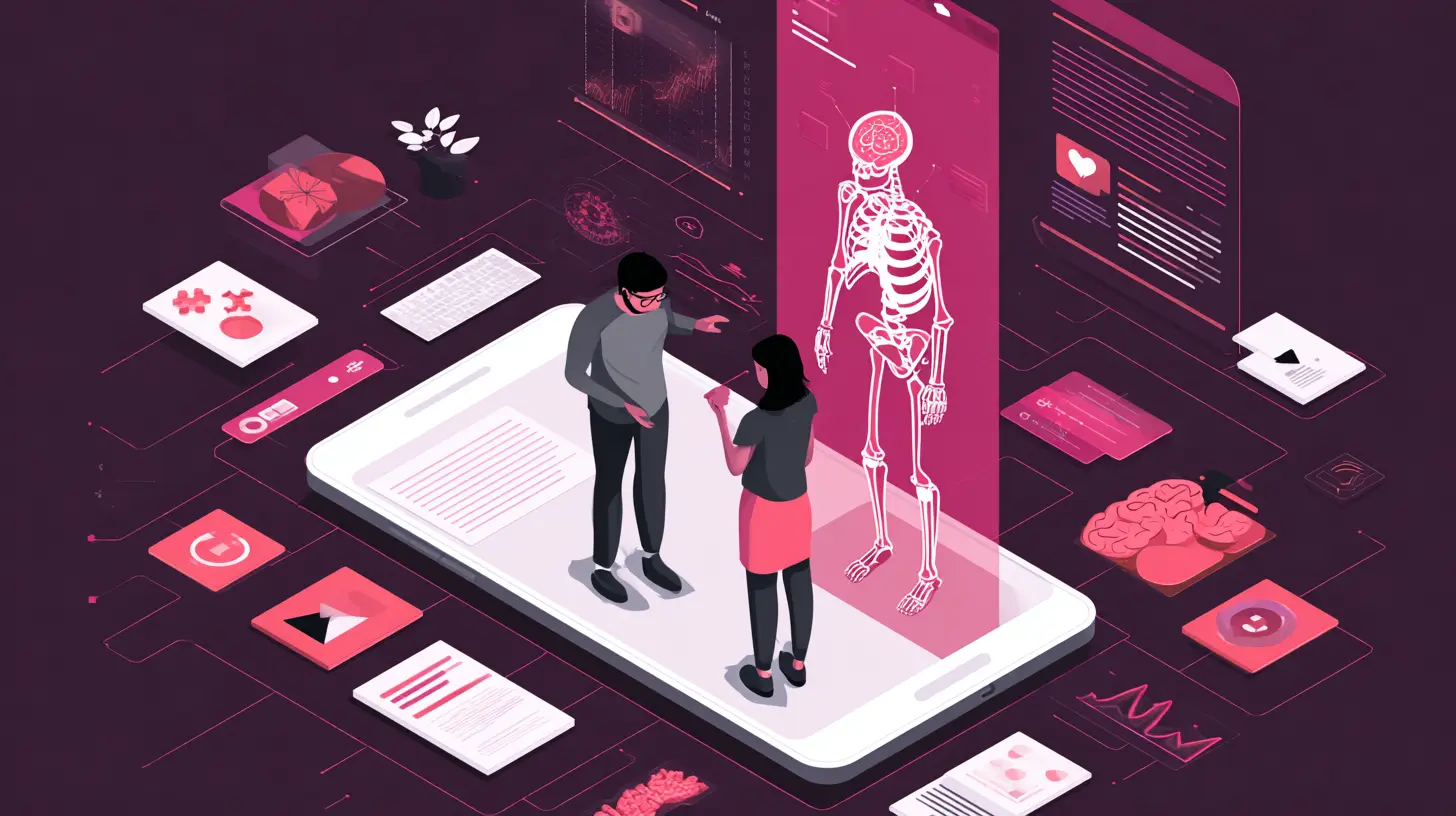
Emotionally Aware Interfaces: The Creepy but Useful Frontier
Here's where it gets a bit sci-fi. AI is learning to read human emotion through micro-expressions, voice tone, typing cadence, and even heart rate data from wearables. By 2026, your devices might know you're frustrated before you do.Picture this: You're struggling with a complex spreadsheet. You start sighing. Your typing gets more aggressive. The AI detects this emotional spike and subtly changes the interface. Maybe it dims the screen to reduce visual noise. Maybe it pops up a small widget saying, "This looks tricky. Want me to walk you through it step by step?" Or maybe it just plays some calming background music.
This isn't about manipulation. It's about empathy. Bad UX makes people angry. Good UX makes people productive. Great UX makes people feel understood. The ethical line here is razor thin, of course. No one wants an app that knows they're sad and tries to sell them a vacation. But in controlled environments like healthcare, education, or even your personal dashboard, emotional awareness could be the key to unlocking genuine flow states.
The Rise of the "Zero UI" and Ambient Experiences
By 2026, the best user experience might be no user experience at all. We're moving toward ambient computing, where the interface disappears into the environment. Think smart glasses that overlay directions onto the real world without you pulling out a phone. Think a car that adjusts the seat, temperature, and playlist based on the time of day and your biometrics, without you touching a single button.This is the "Zero UI" concept. The AI is so integrated into your life that you don't "use" it. You just live, and it adjusts around you. For example, your smart home won't need a control panel. It will learn that you like the lights dim at 7 PM, that you prefer the thermostat at 68 degrees when you're sleeping, and that the coffee maker should start brewing when your alarm goes off. No commands. No menus. Just a seamless, invisible layer of intelligence.
The challenge here is trust. You have to trust that the AI won't screw up. One bad prediction, like locking you out of your house because it thought you were on vacation, can shatter that trust. But as the models get more accurate and learn from edge cases, the ambient experience will feel less like a gamble and more like a safety net.
Hyper-Personalized Content Curation
We're drowning in content. News feeds, social media, streaming services, email newsletters. By 2026, AI won't just recommend content based on what you clicked last week. It will curate a unique reality for you.Imagine an AI that understands your current context. It knows you're commuting, so it shortens articles. It knows you're in a deep work session, so it silences all notifications except urgent ones from your boss. It knows you're feeling nostalgic, so it surfaces photos from three years ago alongside a playlist you loved that month.
This goes beyond algorithms. Algorithms are dumb. They just look at patterns. AI, especially with models that can understand long-term context, will build a mental model of you. It will understand that you like sci-fi but hate body horror. It will know you prefer long-form essays over listicles. It will even know that you have a soft spot for 80s synthwave music when you're coding.
The result is a digital environment that feels curated by a close friend who has perfect taste, rather than a corporate bot trying to maximize engagement. That's a huge shift in quality of life.
The Dark Side: Over-Reliance and Loss of Control
Let's not pretend this is all sunshine and rainbows. A major risk by 2026 is what I call "learned helplessness." If the AI does everything for you, you stop learning how to do things yourself. You lose the muscle memory of navigating a complex interface. You forget how to troubleshoot.There's also the issue of algorithmic bubbles getting even tighter. If the AI only shows you what it thinks you want, you might never discover something new or challenging. Your digital world shrinks into a perfectly comfortable, but incredibly boring, echo chamber.
And then there's the privacy nightmare. For the AI to be this predictive and empathetic, it needs a ton of data. Your biometrics, your keystrokes, your emotional state, your location history, your communication patterns. That's a goldmine for hackers and a legal minefield for companies. By 2026, we're going to have some very public, very ugly data breaches that expose just how much these systems know about us.
The companies that win will be the ones that build transparent, on-device AI that doesn't phone home every second. The ones that lose will be the ones that get greedy and betray user trust. It's that simple.
How Designers and Developers Need to Adapt
If you're building products, the old rules of UX design are going to bend or break. You can't just design static wireframes anymore. You have to design systems that can adapt. You need to think about "anti-fragile" design, where the interface gets stronger and more useful the more it's used.You'll need to build guardrails for the AI. What happens when the AI makes a bad prediction? How does the user override it? How do you ensure the AI doesn't accidentally lock a user into a bad workflow? The role of the designer shifts from creating a perfect path to creating a framework that allows the AI to create many perfect paths for many different users.
This also means writing less code. Instead of hardcoding every button and menu, you'll be training models and setting behavioral rules. The job title "UX Designer" might evolve into "Experience Architect" or "AI Behavior Designer." It's a shift from crafting pixels to crafting intelligence.
The Timeline: What Really Changes by 2026
Let's be realistic. We're not going to have full sentient AI running our lives by 2026. But we will see a massive leap from where we are today. Here's the rough timeline:- Late 2024 - Early 2025: Major apps start rolling out dynamic UIs that adapt to user roles and habits. Voice interfaces become reliable enough for complex tasks. First major emotional AI scandals hit the news.
- Mid 2025 - Late 2025: Predictive UX becomes standard in productivity tools (email, calendars, project management). Natural language replaces half of all menu navigation in mobile apps.
- 2026: Zero UI starts appearing in smart homes and cars. Hyper-personalized content curation becomes the default expectation. Users begin to feel genuinely uncomfortable when an app doesn't know what they want.
The transition won't be smooth. There will be bugs, ethical blunders, and a lot of people complaining about "creepy" features. But the direction is inevitable.
Final Thoughts: The Human Element Still Matters
Here's the thing about all this AI revolution talk. No matter how smart the machine gets, the core of user experience is still about human connection. A beautiful, intuitive interface is nice. A predictive AI that saves you time is great. But what really makes a product stick is how it makes you feel.By 2026, the best user experiences won't be the ones with the flashiest AI. They'll be the ones that use AI to amplify human connection, not replace it. They'll be the tools that give you back your time, reduce your stress, and let you focus on what actually matters: living your life, not managing your software.
So, are you ready for an interface that knows you better than you know yourself? Because it's coming. And honestly, if it's done right, it might be the best thing to happen to the internet since the browser.
all images in this post were generated using AI tools
Category:
User ExperienceAuthor:

Vincent Hubbard
Discussion
rate this article
2 comments
Kai Spencer
This article offers insightful perspectives on the transformative potential of AI in user experience. The predictions for 2026 are compelling and highlight the importance of staying ahead in technology to enhance interactions and meet evolving user needs effectively.
May 16, 2026 at 3:18 AM
Vincent Hubbard
Thank you for your thoughtful comment. I'm glad you found the predictions compelling and relevant. It's exciting to think about the future of user experience with AI advancements.
Alanna McKinnon
While the potential for AI to enhance user experience is exciting, we must consider the risks of over-reliance on technology. Personalization can easily cross into manipulation, and user privacy remains a significant concern. A thoughtful approach that balances innovation with ethical considerations will be essential for sustainable growth in this field.
May 15, 2026 at 3:29 AM
Vincent Hubbard
You raise valid points. Balancing innovation and ethics is crucial as we navigate this evolving landscape. User trust will be key to sustainable progress.