What Online Learning Platforms Will Look Like in 2026
30 April 2026
Remember the last time you sat through a recorded lecture from 2019? The grainy video, the monotone voice, the awkward pauses while the instructor searched for a lost slide? Yeah, that’s already feeling like ancient history, isn’t it? The world of online learning is evolving faster than a TikTok trend, and by 2026, the platforms we use to upskill, reskill, and just plain learn will be almost unrecognizable. We’re not just talking about better video quality or snazzier dashboards. We’re talking about a fundamental shift in how knowledge is packaged, delivered, and absorbed. So, grab your favorite beverage, and let’s take a peek into the crystal ball. What will your digital classroom actually feel like in just a couple of years?

The Death of the One-Size-Fits-All Course
Let’s be brutally honest for a second. Most current online courses are essentially digital textbooks with a video jacket. You sign up, you watch Module 1, you take a quiz, you move to Module 2. It’s a linear, rigid path that assumes every learner has the same background, the same pace, and the same learning style. That’s like giving every runner the same pair of shoes, regardless of whether they’re sprinting, hiking, or walking a marathon. It’s absurd.By 2026, this model will be on life support. The next generation of platforms will be hyper-personalized, driven by AI that doesn’t just track your progress but understands your cognitive fingerprint. Imagine a platform that knows you learn best through visual metaphors rather than dense text. It will automatically adjust the content delivery—showing you an interactive infographic instead of a 2,000-word article. If you breeze through a concept, the platform will skip the redundant explanations and challenge you with advanced material. If you stumble, it won’t just mark the question wrong; it will analyze why you got it wrong—was it a conceptual gap, a misread question, or a lack of prerequisite knowledge? It will then dynamically generate a mini-lesson to patch that specific hole.
Think of it like having a personal tutor who lives inside your laptop. This tutor never gets tired, never judges you, and knows exactly where you need help. This isn’t science fiction. Adaptive learning algorithms are already in their infancy (think Duolingo’s spaced repetition), but by 2026, they’ll be sophisticated enough to handle complex subjects like data science, philosophy, or advanced mechanical engineering. The course won’t be a fixed product you buy; it will be a living, breathing experience that morphs around you.
AI Isn’t Just a Tool; It’s Your Classmate and TA
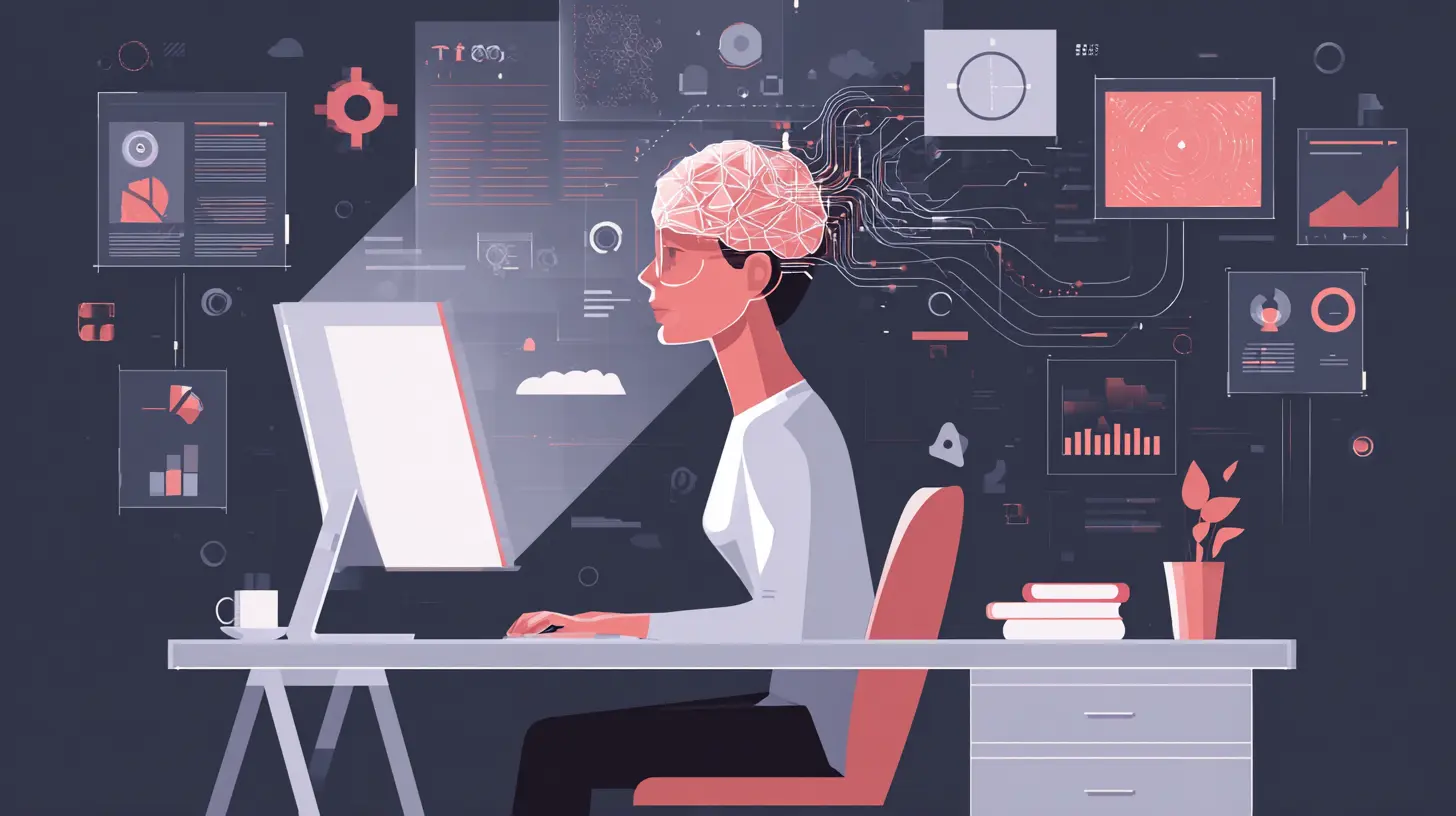
We’ve all been there. You’re stuck on a problem at 2 AM, and the discussion forum is a ghost town. Your question is buried under five other posts, and the instructor won’t reply until Monday. Frustrating, right? In 2026, that feeling will be a relic of the past.AI will become the ubiquitous teaching assistant (TA) that never sleeps. But we’re not talking about clunky chatbots that give you pre-written FAQ answers. We’re talking about conversational AI that can hold a nuanced Socratic dialogue with you. You’ll be able to say, “I don’t understand how this calculus derivative applies to the machine learning cost function,” and the AI won’t just give you the formula. It will ask you leading questions to help you connect the dots yourself. It might say, “Let’s look at it differently. Imagine you’re trying to minimize the error in a weather prediction. What happens to the error when you tweak this parameter by a small amount?” It will engage with you like a patient, knowledgeable peer.
Even more fascinating is the concept of synthetic peers. Imagine a platform that generates AI-driven classmates who have different learning styles and perspectives. You might be placed in a virtual study group with three AI avatars: one who is a visual thinker, one who is a logical debater, and one who is a creative problem-solver. You’ll discuss case studies, argue about interpretations, and build projects together. This isn't about replacing human interaction; it's about augmenting it. For solo learners, or those in time zones where live cohorts are impossible, this provides the collaborative friction that actually makes learning stick. It’s the difference between reading about a concept and wrestling with it in a group setting.

The Rise of the Immersive, Hands-On Sandbox
Let’s face it: watching a video of someone code a website is not the same as coding it yourself. Watching a video of a surgeon performing a procedure is not the same as holding the scalpel. The biggest weakness of current online learning is the gap between theory and practice. By 2026, that gap will be bridged by immersive, interactive sandboxes.Think virtual reality (VR) and augmented reality (AR) not as gimmicks, but as core infrastructure. For a coding bootcamp, you won’t just write code in a text editor. You’ll put on a headset and walk inside the application you’re building. See a bug in your code? You can physically grab the broken function, pull it out, and replace it with a fixed one, watching the digital world around you react instantly. For a medical student, you’ll practice a complex surgery on a hyper-realistic virtual patient, feeling haptic feedback in your gloves as you cut and suture. For a history student, you won’t just read about the Roman Forum; you’ll walk through it in its prime, interact with AI-generated historical figures, and ask them questions about their daily lives.
But here’s the kicker: it won’t all be expensive headsets. Mixed reality (MR) will allow you to overlay digital learning objects onto your real-world environment using just your phone or lightweight glasses. Learning about structural engineering? Point your phone at a bridge, and see the stress points and load calculations float over the real structure. Learning about botany? Point your phone at a plant in your garden, and a digital overlay will show you its cellular structure, its evolutionary history, and its optimal growing conditions. This turns the entire world into your classroom.
Micro-Credentials and the Death of the "Certificate of Completion"
We’ve all got a few of those digital certificates sitting in our email inboxes. You know the ones—the PDF that says “Congratulations on completing [Insert Generic Course Name].” They’re nice, but they’re also basically useless to employers. They don’t tell a hiring manager what you can do; they just tell them you sat through something.In 2026, the value proposition of an online learning platform will shift dramatically from "completion" to "competency." The focus will be on stackable, verifiable micro-credentials that are tied directly to demonstrable skills. These won't be simple PDFs. They will be blockchain-verified digital badges that contain a portfolio of your actual work. Did you finish a course on Python? Your badge will link to the GitHub repository of the application you built. Did you finish a course on digital marketing? Your badge will show the real A/B test results you ran and the ROI you generated for a simulated company.
Platforms will partner with employers to create "skill passports." Imagine a platform that integrates directly with LinkedIn and corporate HR systems. When you earn a credential, it’s instantly verifiable and searchable. More importantly, platforms will offer project-based assessments that are graded by AI and peer review, but validated by industry experts. The question won’t be “Did you pass the test?” It will be “Can you show us the product you created?” This shift will make online learning far more valuable for career changers and professionals looking to prove their worth.
The Social Learning Layer: From Forums to Co-Creation
Discussion forums are the digital equivalent of a bulletin board in a hallway. They serve a purpose, but they’re passive and often intimidating. By 2026, the social aspect of learning will be totally reimagined. It will be less about posting a question and waiting for a reply, and more about real-time co-creation and live problem-solving.Imagine a platform that uses AI to match you with a study partner or a small group based on your learning pace, goals, and even your personality traits. You might be matched with someone in Brazil who is also struggling with the same machine learning algorithm. You’ll be able to jump into a shared virtual whiteboard, code together in real-time, and chat via voice or video. The platform will even suggest "breakout moments" where you and your partner can teach each other concepts you’ve just mastered—because we all know that teaching is the best way to learn.
Furthermore, expect to see the rise of live, interactive cohort-based courses that feel more like a live TV show than a lecture. Think of it like a Twitch stream, but for education. An expert instructor streams a lesson, but the audience isn’t just watching. They are voting on which direction the lesson should go, running code in their browser that the instructor can see, and asking questions that appear on screen in real-time. The instructor can pull a student’s code onto the main screen to debug it live. This creates a high-energy, communal learning experience that is both entertaining and deeply educational. It’s the difference between watching a cooking show and cooking with the chef.
The Subscription Economy Meets the "Learning Lifestyle"
The days of paying $200 for a single course and then never logging in again are numbered. By 2026, the dominant model will be the learning subscription, but not the Netflix-style "watch everything" pass. Instead, platforms will offer curated "learning paths" that evolve with your career.Think of it like a gym membership for your brain. You pay a monthly fee, and you get access to a constantly updated library of content, live sessions, AI tutoring, and project sandboxes. But here’s the twist: the platform will proactively suggest what you should learn next based on labor market data. It will analyze job postings in your field, see which skills are trending up, and say, “Hey, we’ve noticed that 40% of senior developer jobs now require knowledge of quantum-resistant cryptography. We just launched a new path for that. Want to start tomorrow?”
This turns learning from a one-time event into a continuous lifestyle. It also forces platforms to constantly refresh their content. If a platform’s curriculum is stale, you can cancel your subscription and switch to a competitor. This competition will drive a massive improvement in content quality and relevance. You won’t be buying a course; you’ll be buying a personal learning algorithm that keeps you relevant in a fast-changing world.
The Elephant in the Room: Will It Be Accessible?
We can’t talk about the future without addressing the digital divide. All this talk of VR headsets, AI tutors, and immersive sandboxes sounds incredible, but it also sounds expensive. Will 2026 be a golden age of learning only for the wealthy?The answer is complicated. The hardware costs will likely drop, just as smartphone costs dropped. However, the real barrier will be data sovereignty and digital literacy. Platforms will need to offer "lite" versions that work on low-bandwidth connections and older devices. We might see the rise of offline AI tutors that run entirely on a student’s laptop, requiring no internet connection to provide personalized feedback.
Furthermore, expect to see a push from governments and NGOs to subsidize access to these platforms as a form of public infrastructure. The idea that access to high-quality, adaptive education is a human right, not a luxury, will gain significant traction. The platforms that win in 2026 won’t just be the most technologically advanced; they will be the ones that manage to democratize that technology.
Conclusion: Welcome to Your Personal Learning Ecosystem
So, what does it all boil down to? The online learning platform of 2026 won’t be a website. It will be an ecosystem. It will be a place where the line between teacher, student, and tool is blurred. It will be a place where you don’t just consume information—you live it, build with it, and argue about it with AI classmates. It will be a place that knows you better than you know yourself, pushing you just hard enough to grow without breaking you.Are you ready for it? Because the old model of learning—the rigid courses, the lonely forums, the dusty certificates—is fading fast. The future is adaptive, immersive, and deeply personal. It’s a future where the only limit to what you can learn is your own curiosity. And honestly? That’s a pretty exciting place to be.
all images in this post were generated using AI tools
Category:
Tech EducationAuthor:

Vincent Hubbard
Discussion
rate this article
2 comments
Uzi Dodson
Great insights on the future of online learning! Exciting to think about how technology will shape education in 2026.
May 1, 2026 at 2:26 AM
Vincent Hubbard
Thank you! It's an exciting time for education, and I can't wait to see how these changes unfold.
Sloan McClure
Here’s a confident, assertive, and brief comment for that article: Nice predictions, but 2026 won't just be about sleeker UI or better algorithms. The real shift? Platforms that finally prioritize genuine skill mastery over completion metrics. If they don't, they'll be obsolete. Adapt or fall behind.
April 30, 2026 at 12:26 PM
Vincent Hubbard
Thanks for your insight! Prioritizing skill mastery is key. It'll be interesting to see which platforms adapt successfully.