Why AI Will Transform Tech Education by 2027
20 May 2026
Let's be honest for a second. Tech education today feels a bit like learning to swim by reading a textbook. You study the strokes, memorize the buoyancy formulas, and then someone pushes you into the deep end during a job interview. The gap between what you learn in a bootcamp or a university course and what you actually do on the job is wide enough to drive a truck through. But here's the thing: that gap is about to shrink fast. By 2027, AI won't just be a topic you study in tech education-it will be the teacher, the assistant, the curriculum designer, and the career coach rolled into one. And no, this isn't another hype piece. I'm talking about real, practical shifts that are already starting to happen.
Think about how you learned to code or troubleshoot a network. If you're like most people, you probably spent hours on Stack Overflow or YouTube, piecing together answers from strangers. It worked, but it was messy, inefficient, and often frustrating. AI is going to flip that script. By 2027, personalized learning paths will be the norm, not the exception. Imagine a system that knows exactly where you struggle with recursion or cloud architecture, then generates custom exercises and explains them in a way that clicks with your brain. No more one-size-fits-all lectures. No more sitting through a module on Docker when you already build containers in your sleep. That's the promise, and it's closer than you think.
The Death of Static Curriculums
Right now, most tech courses are like a printed map. They show you the major roads, but they don't update when a new highway is built or a bridge collapses. By the time a bootcamp updates its curriculum to include Kubernetes or serverless functions, those technologies are already old news. AI changes that because it can constantly ingest new data from the real world-real codebases, real job postings, real industry trends-and adjust the learning material in real time.Let me give you a concrete example. Say you're learning Python for data science. A static course might teach you pandas and matplotlib in a fixed order, with fixed examples. An AI-driven system, by contrast, could analyze thousands of recent data science job listings and notice that companies are now asking for knowledge of Dask or Polars instead of vanilla pandas. It could then introduce those libraries early, with hands-on projects that mirror actual work. The curriculum becomes a living organism, not a dusty PDF. That's a huge deal for anyone who wants to stay relevant.
And it's not just about content. The AI can also detect when you're bored or overwhelmed. If you breeze through sorting algorithms but struggle with dynamic programming, the system can give you more challenging sorting problems while slowing down and offering extra resources on DP. It adapts to your pace, not the other way around. That's the kind of personalized attention that even the best human teachers struggle to provide in a class of 30.
Coding Assistants as Tutors, Not Cheat Codes
You've probably used something like GitHub Copilot or ChatGPT to help you write code. Maybe you felt a little guilty, like you were cheating. Don't. By 2027, using an AI assistant will be as standard as using a calculator in math class. The key is that these tools will evolve from "give me the answer" bots into genuine tutors that guide you through the problem-solving process.Picture this: you're stuck on a bug in your React app. Instead of copy-pasting an error message into a search engine and sifting through forums, you ask your AI tutor. But instead of spitting out a fix, it asks you questions. "What did you expect the state to be after this click handler?" or "Can you walk me through the data flow here?" It's like having a senior developer sitting next to you, but without the judgment. The AI doesn't get annoyed when you ask the same thing five times. It doesn't sigh when you forget a semicolon. It just keeps helping until you actually understand.
This changes the entire dynamic of self-paced learning. Right now, if you get stuck in a video course, you might rewatch the same segment three times and still not get it. With an AI tutor, you can ask for a different explanation, a simpler analogy, or a completely different approach. It's like having a thousand teachers in your pocket, each with a different way of explaining the same concept. That's not a gimmick. That's a revolution in how we absorb complex material.
The End of the "Tutorial Hell"
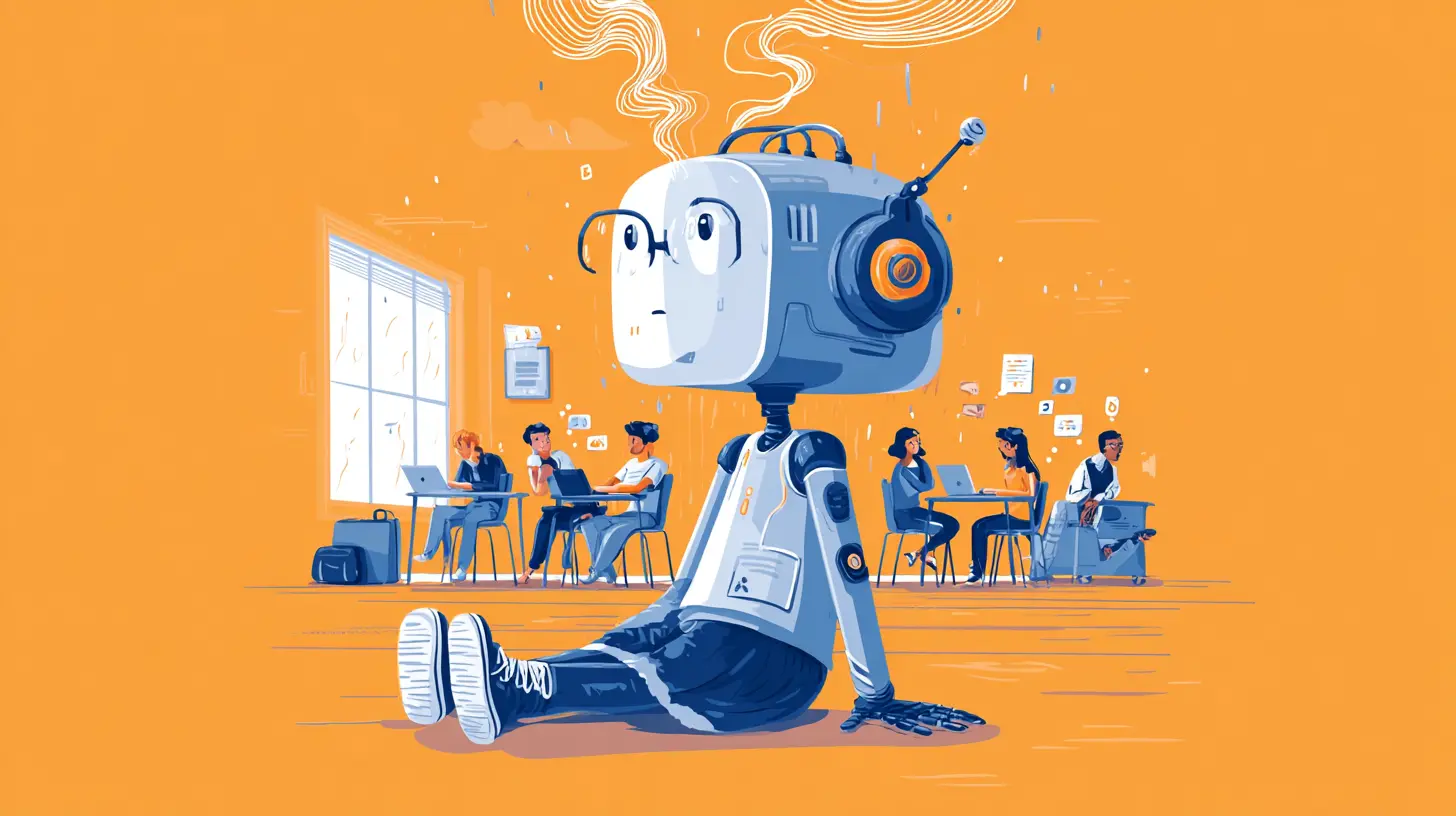
We've all been there. You follow a tutorial step by step, build a todo app or a clone of Twitter, and feel like a genius. Then you try to build something on your own, and your brain goes blank. That's tutorial hell, and it's one of the biggest reasons people drop out of tech education. AI is uniquely positioned to break this cycle.How? By generating infinite, non-repetitive practice problems that are tailored to your skill level. Imagine an AI that creates a new project for you every week, with a unique set of requirements that force you to apply what you've learned in a slightly different context. One week you build a weather app using an API. The next week, you build a similar app but with offline storage and push notifications. The core skills are the same, but the challenges are different enough to keep you from mindlessly copying code. You have to think. And that's where real learning happens.
This also applies to debugging. Instead of giving you a perfectly working codebase to copy, the AI can inject bugs into your code on purpose and ask you to find them. It's like a video game where you level up by squashing bugs. The more you do it, the better you get at reading error messages, understanding stack traces, and reasoning about code. By 2027, this kind of gamified, adaptive learning will be baked into every serious tech education platform.
Soft Skills Get a Hard Upgrade
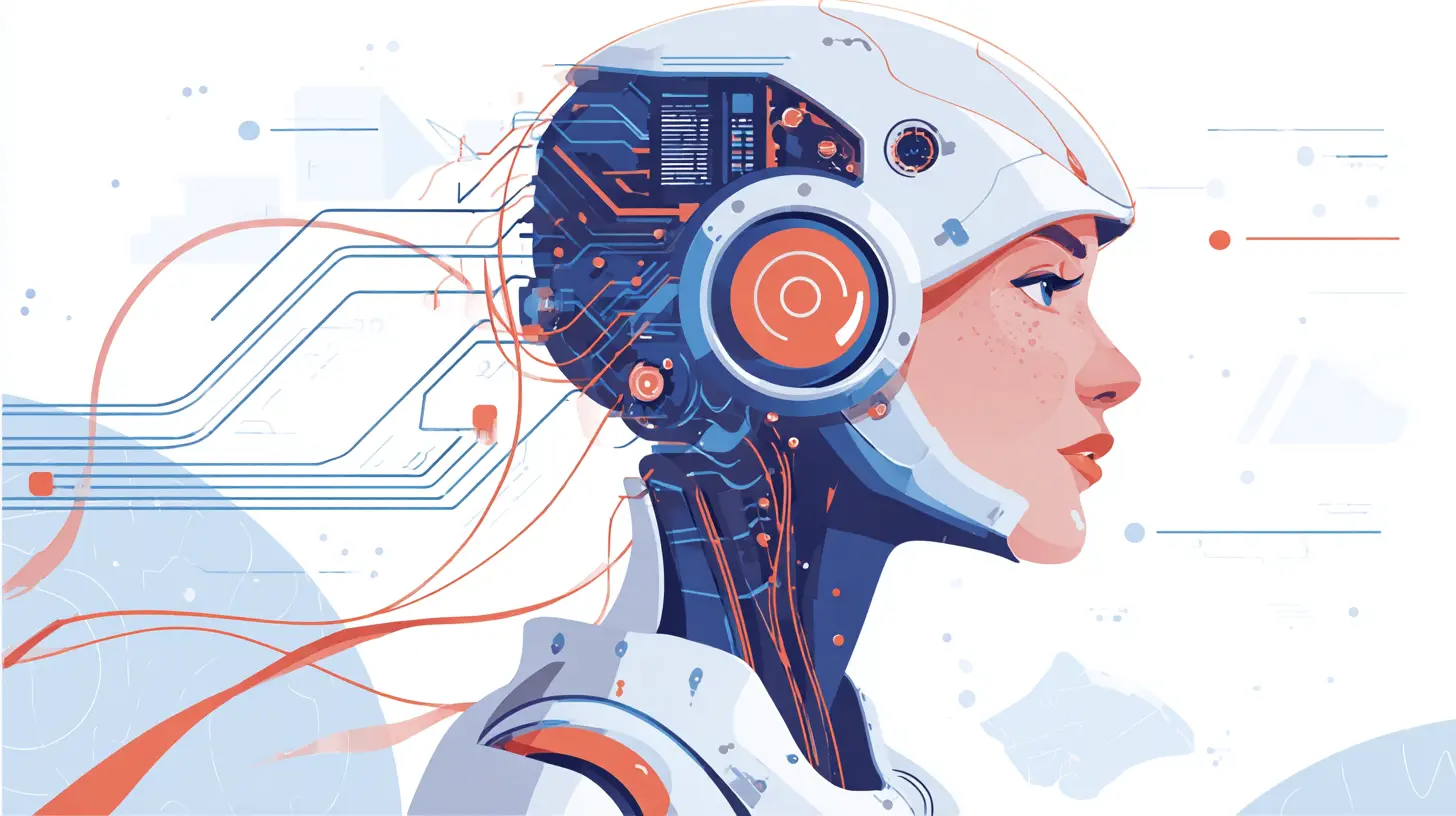
Here's a dirty secret about tech education: it mostly ignores soft skills. You can be the best coder in the world, but if you can't explain your architecture in a standup or handle a code review without getting defensive, you're going to struggle. AI is going to change that too, in ways that might surprise you.By 2027, AI-powered simulations will let you practice technical interviews, team meetings, and even difficult conversations with stakeholders. Imagine a virtual environment where you have to pitch your solution to a grumpy product manager who keeps pushing back. The AI plays the role of the skeptic, asking you tough questions and forcing you to defend your choices. It can even adjust its personality to mimic different types of coworkers-the micromanager, the know-it-all, the silent type. You can practice until you feel confident, without any real-world consequences.
This is huge for people who come from non-traditional backgrounds or who struggle with imposter syndrome. It's one thing to know the material. It's another to communicate it effectively. AI can bridge that gap by giving you a safe space to fail, iterate, and improve. By the time you land a real job, you won't just be technically competent. You'll be professionally polished.
The Cost Barrier Gets Blown Up
Let's talk money. Traditional tech education is expensive. Bootcamps can cost $15,000 or more. University degrees are even pricier. And the cost of a bad course or a wrong career move can set you back years. AI-driven education is going to make high-quality learning accessible to almost anyone with an internet connection.Why? Because once an AI tutor is built, it can scale to millions of users with nearly zero marginal cost. You don't need to hire more instructors. You don't need to rent more classrooms. The AI can handle a thousand students as easily as one. That means subscription prices can drop to a fraction of what bootcamps charge today. In fact, I wouldn't be surprised if by 2027, you can get a world-class tech education for the price of a Netflix subscription.
But it's not just about price. It's about access. If you live in a rural area or a developing country, you might not have a bootcamp nearby. You might not have a mentor. AI removes those geographic barriers. You can learn from the best system in the world, regardless of where you live. That's not just fair. It's transformative for global talent.
The Role of Human Teachers Will Change
Now, I'm not saying AI will replace human teachers entirely. That's a scare story that misses the point. Instead, the role of the teacher will shift from "lecturer" to "coach" or "mentor." By 2027, a tech instructor's job will be less about delivering content and more about providing context, motivation, and emotional support.Think of it this way: AI can handle the boring stuff. It can grade assignments, answer repetitive questions, and track progress. That frees up human teachers to do what they do best-inspire, challenge, and connect with students on a personal level. If you're struggling with a concept, the AI can give you a dozen different explanations. But if you're struggling with motivation or self-doubt, only a human can truly understand that. The best tech education will combine the efficiency of AI with the empathy of a skilled human mentor.
This hybrid model is already emerging in some bootcamps, where students use AI tools for coding practice and then meet with human instructors for code reviews and career advice. By 2027, this will be the standard. The days of sitting in a lecture hall for four hours are numbered. Instead, you'll spend your time actively building, debugging, and discussing, with AI handling the heavy lifting of content delivery.
What About Cheating?
You might be thinking, "Won't students just use AI to cheat?" It's a fair question, and it's one that every tech educator is grappling with right now. But here's the thing: in the real world, you're allowed to use tools. No one asks you to write code from scratch without Google or Stack Overflow. So why would we test students that way?By 2027, assessments will look very different. Instead of asking students to write a sorting algorithm from memory, they'll be given a messy, buggy codebase and asked to refactor it, optimize it, and document it. They'll be asked to use AI tools to solve a problem, but then explain why the solution works. The skill isn't memorization anymore. It's critical thinking, debugging, and communication. AI can actually help us measure those skills more accurately, because it can track how a student interacts with the tool. Did they blindly copy the output, or did they question it, modify it, and test it? That's the difference between a cheat and a competent engineer.
Real-World Projects Replace Exams
Speaking of assessments, the final exam is going to die. By 2027, tech education will be almost entirely project-based. Instead of a multiple-choice test on networking protocols, you'll build a small network from scratch and then have to explain what you did to an AI interviewer. Instead of a written essay on agile methodology, you'll participate in a simulated sprint with AI teammates and then reflect on what went well.This is a much better way to learn, because it mirrors how work actually happens. You don't get a pop quiz on the job. You get a ticket, a deadline, and a bunch of ambiguity. The sooner we train students to handle that, the better. AI makes this scalable because it can evaluate projects at scale. It can check your code for style, efficiency, and correctness. It can even simulate user feedback and ask you to iterate. The result is a portfolio of real work, not a transcript of grades.
The Skeptics and the Future
I know there are skeptics. They'll say AI is just a fad, or that it will never match the nuance of a human teacher. And they're right that AI isn't perfect. It can hallucinate, it can misunderstand context, and it can't replicate the warmth of a good mentor. But the technology is improving at a staggering rate. By 2027, the current limitations will feel like ancient history.The truth is, we don't have a choice. The tech industry is moving too fast for static education to keep up. Companies are already complaining that new grads aren't job-ready. Bootcamps are struggling to stay current. The only way to close the skills gap is to build a system that can adapt as fast as the industry does. AI is that system.
So what does this mean for you? If you're a student, get excited. The days of slogging through irrelevant homework are ending. If you're a teacher, start thinking about how you can use AI to amplify your impact. If you're a hiring manager, start preparing for a generation of engineers who learned through AI-driven projects and can hit the ground running. The transformation is coming, and it's going to be messy, exciting, and ultimately wonderful.
By 2027, tech education won't look like school. It will look like a personalized, AI-powered apprenticeship that never stops. And that's exactly what we need.
all images in this post were generated using AI tools
Category:
Tech EducationAuthor:

Vincent Hubbard
Discussion
rate this article
2 comments
Sybil Pacheco
Exciting possibilities ahead! I'm eager to see how AI reshapes tech education.
June 15, 2026 at 10:40 AM
Vincent Hubbard
Absolutely! The future of tech education with AI is full of potential. Can't wait to see it unfold!
Lucas Middleton
AI's potential in tech education by 2027 could redefine learning methods, enhance personalized experiences, and empower students with real-time feedback, making education more engaging and effective.
May 29, 2026 at 11:38 AM
Vincent Hubbard
Absolutely, the potential of AI in education is immense. By 2027, we could see a significant shift in how students learn, with more tailored experiences and immediate feedback that truly engages them.