Wireless Charging in Laptops: Is It Possible?
4 January 2026
Let’s face it — wires are annoying. They clutter your desk, tangle like a mess of spaghetti, and have an uncanny ability to disappear when you need them most. Smartphones have had wireless charging for years now, so why haven't laptops caught up?
Is it a technological limitation, or is there a deeper reason behind the absence of truly wireless laptop charging? Could we soon be saying goodbye to bulky power bricks and pesky cables? Buckle up because we're diving deep into the mysterious and evolving world of wireless laptop charging. 
The Concept of Wireless Charging
Before we get ahead of ourselves, let's break down what wireless charging actually is. In simple terms, it’s the ability to power up a device without physically plugging it into a charger. Sounds like magic, right? Well, it’s actually science — particularly electromagnetic induction.How Wireless Charging Works
Most modern wireless charging systems operate on a principle called inductive charging. A charging pad creates an electromagnetic field that transfers energy to a compatible device when placed nearby. Your phone, smartwatch, and even some earbuds can harness this energy and convert it into battery power.Then there’s resonant charging, which works at a slightly longer range, allowing power to transfer without needing direct contact. This tech is promising for larger devices, but it’s still far from perfect.
So, if we already have this capability for smaller gadgets, what makes laptops such a tough nut to crack? 
The Challenge of Wireless Laptop Charging
It might seem like adding wireless charging to a laptop is as simple as scaling up the tech we use for smartphones. Unfortunately, it’s not that easy.1. Laptops Require More Power
The first and biggest roadblock? Power consumption.Typical smartphones charge wirelessly at around 5–15 watts. Laptops, on the other hand, demand anywhere from 45 watts to well over 100 watts. That's a massive jump! Current wireless charging technology struggles to handle such high power requirements efficiently.
Yes, there are high-power wireless transmitters, but they tend to be bulky, inefficient, and generate excessive heat. Not exactly ideal for a sleek and portable laptop setup.
2. Heat Management Issues
Speaking of heat, wireless charging isn’t the most energy-efficient process. A significant amount of energy is lost as heat during transmission. For laptops that already have complex cooling systems, adding another heat-generating component could be a recipe for disaster.Excessive heat can cause performance throttling, shorten battery life, and, in extreme cases, lead to hardware failure. No one wants their laptop doubling as a hot plate!
3. Alignment & Distance Problems
Ever placed your phone on a wireless charging pad, only to realize it wasn’t aligned properly and didn’t charge? Now imagine dealing with that frustration on a laptop.Current wireless charging solutions require precise alignment, which isn’t ideal for a device that’s constantly moved around. Additionally, the effective charging range is minimal—meaning you’d still have to keep your laptop in a fixed position. Doesn’t exactly scream "wireless freedom," does it?
4. Cost & Practicality
Let’s be real—laptops are already expensive. Adding wireless charging hardware would only raise the price further. Unless there's a huge demand for it, manufacturers won’t be eager to invest in this technology.Furthermore, charging pads for laptops would likely be large and pricey. Would you pay hundreds of dollars for a charging system that’s possibly slower and less efficient than a cable? Probably not. 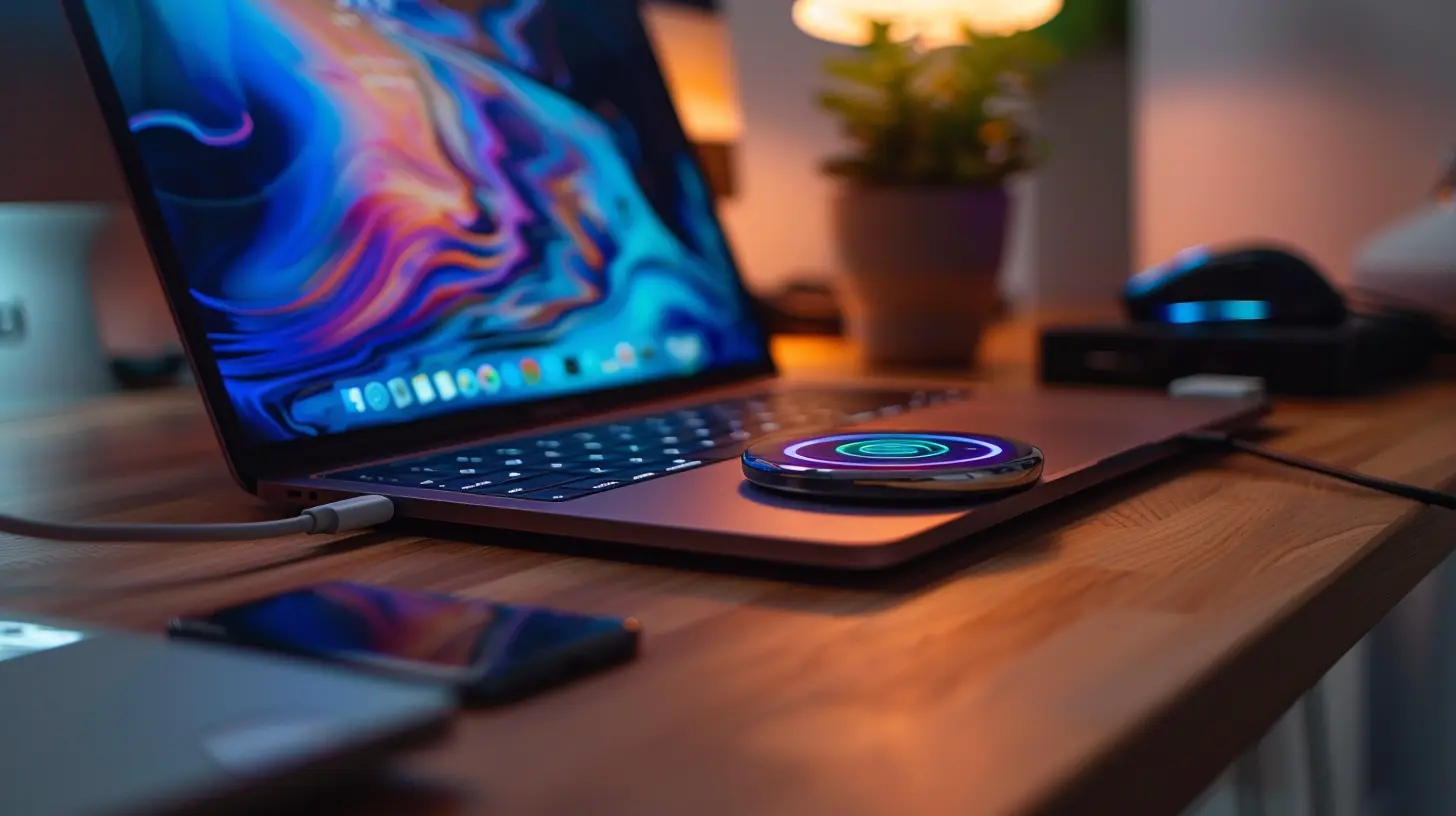
Is Anyone Working on Wireless Laptop Charging?
Despite the challenges, some major tech companies and innovators haven’t given up on the dream of truly wireless laptop charging.Dell and WiTricity’s Attempt
Dell made headlines back in 2017 when they introduced the Dell Latitude 7285, a laptop with wireless charging capabilities. It used WiTricity’s magnetic resonance technology, allowing charging through a specialized charging mat.However, there was a catch—users had to buy a separate charging pad (which wasn’t cheap), and the charging speed wasn’t anything to write home about. The idea never really took off, and the product faded into obscurity.
Apple's Bold Patent Moves
Apple has been filing patents related to wireless laptop charging for years. One of the more fascinating ideas involves using an iPad or a larger MacBook to wirelessly charge smaller Apple devices.While it's clear Apple is thinking about ways to eliminate wires, they haven’t yet introduced a fully wireless charging MacBook. Still, given their track record of innovation, it wouldn’t be surprising if they were the first to crack the code.
Space-Based Wireless Power Transfer?
Now, here’s where things get really interesting. Some researchers are exploring the idea of transmitting power wirelessly over longer distances, using electromagnetic waves similar to how radio signals work.Imagine a world where your laptop charges anywhere in your house without needing a charging pad. Sounds like sci-fi, right? Well, companies like Ossia and Energous are working on making this a reality. While it’s still in early stages, the potential is mind-blowing. 
What’s the Future of Wireless Laptop Charging?
Right now, wireless laptop charging is not quite ready for mainstream adoption. The power requirements, heat management, and efficiency issues are simply too big of an obstacle.However, there’s hope. Advancements in higher-efficiency wireless power transfer, better cooling methods, and more efficient batteries could eventually make it feasible. Here’s what we might see in the near future:
1. Charging Desks Instead of Charging Pads
Rather than placing your laptop on a specific charging pad, what if your entire desk surface acted as a wireless charger? This concept could be far more practical, keeping your workspace clutter-free while constantly powering your laptop.2. Smart Power Management
Future wireless charging solutions might only activate when needed, reducing heat and improving overall efficiency. Think of it like a smart assistant that knows when your laptop requires power and adjusts accordingly.3. Long-Distance Wireless Charging
While it sounds like science fiction, long-range wireless power transfer could eliminate the need for any physical chargers altogether. Imagine walking into a coffee shop and having your laptop charge automatically just by being in the room. That’s the dream, isn’t it?Final Thoughts
So, is wireless laptop charging possible? Technically, yes. But is it practical right now? Not quite.The technology is still in its infancy, and until we solve the hurdles of power efficiency, heat management, and cost, we’ll likely be stuck using our trusty charging cables. That said, with major tech giants investing in new methods, we might not have to wait too long for a breakthrough.
Maybe in the near future, we’ll look back at wired charging the same way we see dial-up internet today—a relic of the past.
Until then, keep your charger handy.
all images in this post were generated using AI tools
Category:
Wireless ChargingAuthor:

Vincent Hubbard
Discussion
rate this article
2 comments
Celine Butler
This article beautifully highlights the potential of wireless charging in laptops. The convenience it could bring to our everyday lives is exciting. Thank you for sparking this important discussion!
February 1, 2026 at 4:02 AM
Vincent Hubbard
Thank you for your thoughtful comment! I'm glad you found the discussion on wireless charging in laptops exciting. It truly has the potential to transform our daily experiences.
Nala Carey
Wireless charging for laptops sounds like a game-changer! Imagine ditching cables at your desk. Excited to see how this tech evolves—let's hope it becomes a reality!
January 9, 2026 at 3:22 AM
Vincent Hubbard
Absolutely! Wireless charging for laptops would revolutionize our workspace. We're excited about the potential too!