Future Laptops That Could Change Mobile Computing by 2026
29 April 2026
Let’s be honest—your current laptop probably feels like a trusty old pickup truck. It gets you from point A to point B, but it’s not exactly turning heads or breaking speed limits. Now, imagine strapping a rocket engine to that pickup. That’s the kind of shift we’re talking about when we look at the Future Laptops That Could Change Mobile Computing by 2026. These aren’t just incremental upgrades. I’m talking about devices that could make you question whether you even need a desktop anymore. By 2026, the line between “portable” and “powerful” might vanish entirely. So, grab a coffee, and let’s dive into what’s coming—because frankly, the next two years are going to be wild.
The End of the “Ultrabook vs. Gaming Laptop” Divide
Remember when you had to choose between a featherlight machine for coffee shops and a chunky beast for rendering 3D models? That’s about to feel as outdated as a floppy disk. By 2026, chip architecture is evolving so fast that we’ll see laptops that are both thin and monstrously powerful. Think about it: ARM-based processors like Apple’s M-series have already shown us that you can have incredible battery life and desktop-class performance. But the real game-changer will be the next-gen chips from Qualcomm, AMD, and Intel that use 3-nanometer or even 2-nanometer processes. We’re talking about CPUs that run cooler, sip power, and still crush a 4K video edit without breaking a sweat.What does that mean for you? No more compromises. You’ll be able to buy one laptop that handles your heavy-duty work, your gaming sessions, and your Netflix marathons—all without sounding like a jet engine. It’s like having a Swiss Army knife that also works as a chainsaw. By 2026, the term “ultrabook” might just become a generic term for “any laptop that doesn’t suck.”
Why thermal design will finally get smarter
Heat has always been the enemy of thin laptops. But here’s the kicker: companies are experimenting with vapor chambers, liquid metal thermal compounds, and even tiny fans that spin at ultrasonic speeds. Some prototypes even use the laptop’s own chassis as a heatsink. Imagine a laptop that stays cool to the touch even when you’re running a heavy simulation. That’s not sci-fi—that’s 2026.
Foldable Screens That Actually Make Sense
I’ll be the first to admit: foldable phones have been a mixed bag. They’re cool, but they feel fragile. Laptops, however, are a different story. By 2026, foldable laptops like the Lenovo ThinkPad X1 Fold or the ASUS Zenbook 17 Fold will have matured into reliable, daily-driver machines. But here’s the twist: they won’t just fold. They’ll transform.Imagine a 13-inch laptop that unfolds into a 17-inch tablet, then folds again into a compact book. You’ll be able to use it as a dual-screen workstation, a digital whiteboard, or even a massive e-reader. The hinges will be stronger, the crease less visible, and the software will finally catch up. Microsoft is rumored to be working on a “Windows 12” that treats foldable screens as a first-class citizen, not an afterthought. So, by 2026, you might not carry a laptop and a tablet—you’ll carry one device that does both.
The durability question: Will it survive your backpack?
Let’s address the elephant in the room: breakability. Manufacturers are already testing ultra-thin glass that bends but doesn’t shatter. Some are even using self-healing polymers that can repair minor scratches. By 2026, I expect foldable laptops to be as durable as a standard clamshell. Will they be drop-proof? Not yet. But they’ll survive a tumble off your desk—something current foldables can’t claim.
AI Coprocessors: Your Laptop Will Think for You
You’ve probably heard of AI in laptops—things like background blur in video calls or voice assistants. But by 2026, AI won’t be a feature; it’ll be the operating system. We’re talking about dedicated neural processing units (NPUs) that handle tasks like real-time language translation, automatic photo editing, and even predictive battery management. Your laptop will learn your habits. It’ll know that you always open Chrome, Slack, and Spotify at 9 AM, and it will pre-load those apps to save time.But here’s where it gets wild: AI coprocessors will enable “on-device” AI that doesn’t need the cloud. That means faster responses, better privacy, and no internet dependency. Imagine a laptop that can generate a presentation outline from your voice notes without sending data to a server. Or one that can upscale a blurry old photo in seconds. By 2026, your laptop will feel less like a tool and more like a partner.
Will AI replace your need for expensive software?
Think about it. If your laptop’s AI can automatically remove backgrounds, color-grade video, or write code snippets, do you still need Adobe Creative Cloud or a subscription to Copilot? Some of these capabilities will be built into the OS for free. That’s a massive shift for mobile computing—it democratizes professional tools.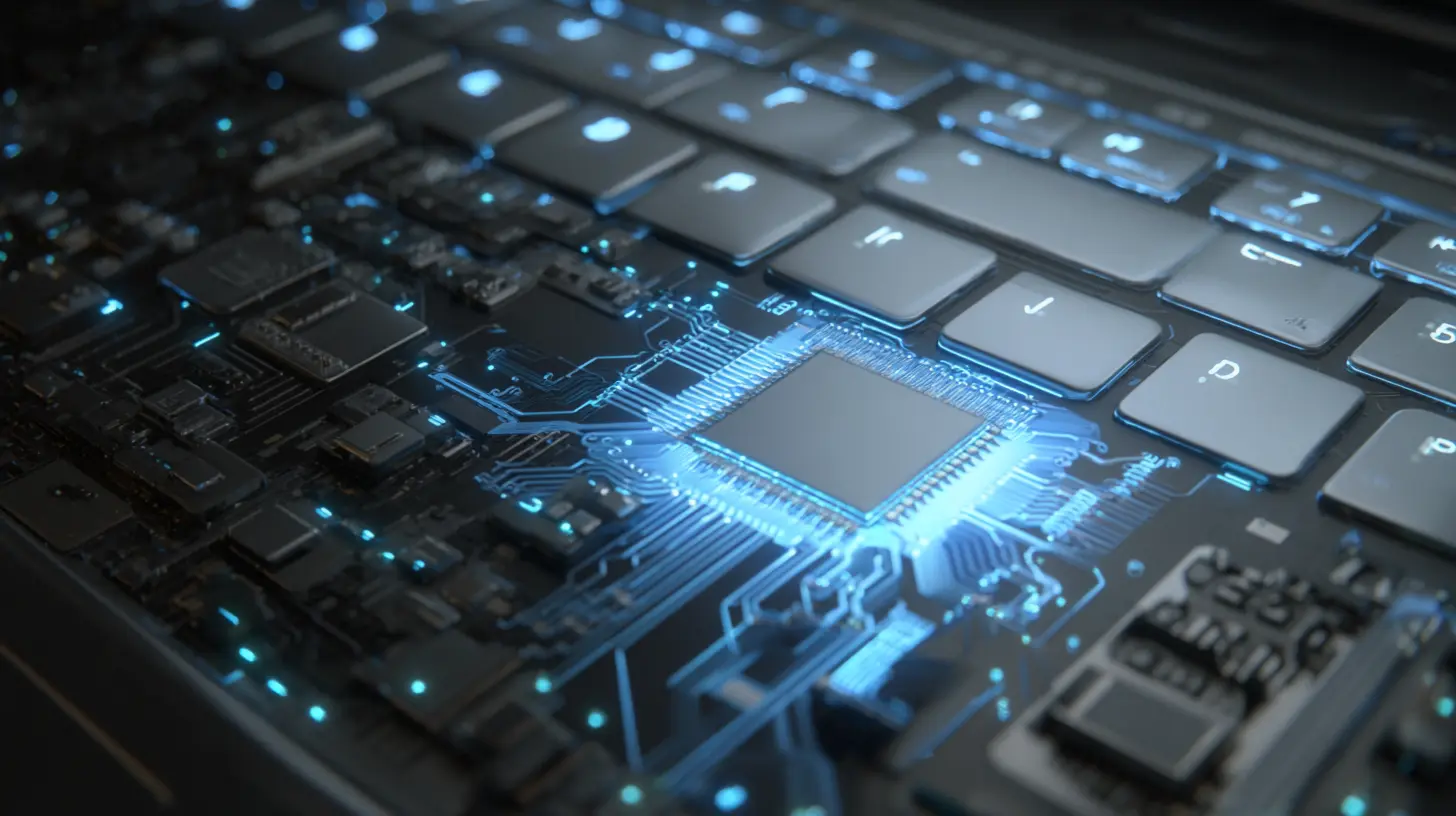
Battery Breakthroughs: Charging Once a Week
I know, I know—everyone promises better battery life. But hear me out. Solid-state batteries are finally leaving the lab. Unlike the lithium-ion batteries we use today, solid-state batteries are denser, safer, and last longer. By 2026, several laptop manufacturers plan to adopt this tech. We’re looking at 30 to 40 hours of real-world usage on a single charge. That’s not “light use”—that’s full-on productivity, streaming, and gaming.But it gets better. Some researchers are working on “self-charging” laptops that harvest energy from ambient light or even your typing motion. Imagine a laptop that gains a few percentage points of battery just from sitting near a window. It sounds like magic, but it’s actually science. By 2026, you might only plug in your laptop once a week—or less.
What about fast charging?
Oh, it’s coming too. We’re talking 50% charge in 5 minutes using gallium nitride (GaN) chargers. These chargers are already small, but by 2026, they’ll be embedded into the laptop itself. So you’ll get a 10-minute coffee break, and your laptop will be ready for the rest of the day. No more hunting for outlets in airports.Modular Laptops: Upgrade Without Buying New
Let’s face it: most laptops are glued-shut nightmares. Want more RAM? Tough luck—buy a new machine. But by 2026, modular designs from companies like Framework and even Dell might become mainstream. These laptops let you swap out the CPU, GPU, RAM, and storage like LEGO blocks. Imagine buying a base model in 2024, then upgrading the processor in 2026 for a fraction of the cost of a new laptop.This isn’t just about saving money—it’s about sustainability. E-waste is a massive problem, and modular laptops could reduce it significantly. Plus, it gives you the freedom to customize your machine for your specific needs. Need a beefier GPU for video editing? Swap it in. Want a lighter battery for travel? Pop in a smaller one. By 2026, your laptop could evolve with you.
Will modular designs be slower?
Not at all. With new interconnect standards like PCIe 5.0 and USB4, modular components will communicate at speeds that rival soldered parts. The only trade-off might be a slightly thicker chassis, but honestly, who cares when you can upgrade your laptop like a desktop?
Holographic Displays and Spatial Computing
You’ve seen it in sci-fi movies: a hologram floating above a laptop. Well, by 2026, that might be a reality—sort of. Companies like Looking Glass and even Apple are working on “light field” displays that project 3D images without special glasses. Imagine designing a 3D model on your laptop, then pulling it out of the screen to inspect it from all angles. Or having a video call where the person appears as a life-sized hologram.This technology is still expensive, but by 2026, it could trickle down to premium laptops. It’s not just a gimmick either. Architects, surgeons, and engineers already use spatial computing for work. A laptop that can do that natively would be a game-changer for mobile computing.
Will it replace your monitor?
Not entirely—but it could augment it. Think of it as having a virtual second screen that floats in the air. You could have your email on the physical screen and a 3D model hovering beside it. By 2026, this might be as common as having a touchscreen.Connectivity: 5G and Wi-Fi 7 Will Make Wires Obsolete
By 2026, Wi-Fi 7 will be standard. We’re talking speeds of up to 30 Gbps—faster than most wired Ethernet connections. Combine that with built-in 5G (not just 4G), and your laptop will be permanently connected at lightning speed. No more tethering to your phone. No more hunting for Starbucks Wi-Fi. You’ll be able to stream 8K video, download massive files, and play cloud games anywhere.But here’s the real kicker: latency will drop to under 1 millisecond. That means cloud computing will feel local. You could run a virtual desktop from a server miles away, and it would feel like the software is installed on your machine. This opens the door to “thin clients” that are just keyboards and screens, with all the heavy lifting done in the cloud. By 2026, your laptop might not even need a powerful processor—it’ll just be a portal to a supercomputer in the sky.
Is cloud computing safe for mobile users?
It’s getting safer. With encrypted connections and on-device AI handling sensitive data, the risks are minimal. Plus, you’ll have the option to store everything locally if you prefer. The point is, you’ll have choice.
The Rise of E-Ink and Dual-Screen Laptops
E-ink displays are amazing for reading—they’re easy on the eyes and use almost no power. But they’re slow and grayscale. By 2026, we’ll see color E-ink screens that refresh fast enough for video. Imagine a laptop with a primary OLED screen for work and a secondary E-ink screen for note-taking, reading, or displaying always-on information.Some laptops, like the Lenovo Yoga Book 9i, already have dual OLED screens. But by 2026, we’ll see hybrid designs: one screen for high-res color, the other for low-power tasks. You could have your email on the E-ink screen while editing a video on the main display. It’s like having a Kindle and a MacBook in one device.
Will this kill the physical keyboard?
Not quite. Physical keyboards are still superior for typing. But by 2026, haptic feedback on glass keyboards will be so good that you won’t notice the difference. Some laptops might even have a configurable keyboard that changes layout based on the app you’re using—a boon for multilingual users.Sustainability: Laptops That Give Back
Here’s a sobering thought: most laptops are designed to be replaced every 3-4 years. That’s bad for the planet. By 2026, expect a shift toward “circular” laptops made from recycled materials, with easily replaceable parts. Companies like Dell and HP are already using ocean-bound plastics and bamboo packaging. But the next step is laptops that are fully recyclable.Some prototypes even use “bio-based” batteries made from fungi or algae. Imagine a laptop that, at the end of its life, can be composted—or at least broken down into harmless components. It’s not just about being green; it’s about reducing the toxic waste from e-waste. By 2026, your laptop’s carbon footprint might be a major selling point.
Will sustainable laptops cost more?
Initially, yes. But as manufacturing scales, the cost will drop. Plus, you’ll save money in the long run because you won’t need to replace the whole machine—just the parts that wear out.
The Verdict: What Will You Actually Buy in 2026?
So, after all this speculation, what does the average person’s laptop look like in 2026? Here’s my prediction: It’ll be a foldable, modular device with a solid-state battery, an AI coprocessor, and a light-field display. It’ll weigh less than 2 pounds, last 40 hours, and connect to Wi-Fi 7. You’ll upgrade the GPU in 2028 without buying a new laptop. And it’ll be made from recycled materials.Will it be perfect? No. There will be bugs, price premiums, and some features that flop. But the direction is clear: mobile computing is about to become truly mobile—not just in form factor, but in capability. By 2026, your laptop won’t just be a computer. It’ll be your studio, your gaming rig, your office, and your portal to the metaverse. And honestly? I can’t wait.
all images in this post were generated using AI tools
Category:
Technology ReviewsAuthor:

Vincent Hubbard
Discussion
rate this article
2 comments
Faelith Black
Exciting innovations are on the horizon. Future laptops will redefine how we work and connect!
May 4, 2026 at 10:54 AM
Vincent Hubbard
Absolutely! The advancements we're seeing promise to transform our daily tasks and interactions in remarkable ways. Can't wait to see what's next!
Loretta Fuller
The future of laptops is exhilarating! By 2026, we’ll witness groundbreaking innovations redefining mobile computing. Think ultra-sleek designs, AI integration, and unparalleled performance. Embrace the change, or be left behind in the dust of outdated tech!
April 29, 2026 at 4:39 AM
Vincent Hubbard
Thanks for your enthusiasm! Exciting innovations are definitely on the horizon, and I can't wait to see how they reshape our tech experience.