Teaching Kids to Code: Trends That Will Dominate by 2027
14 May 2026
Remember when "coding for kids" meant dragging around a turtle in Logo or building a clunky HTML page with neon text and a looping MIDI file? Yeah, we have come a long way. Back then, it felt like a niche hobby for the geekiest among us. Today, teaching kids to code is practically a parenting rite of passage, right up there with soccer practice and piano lessons. But the landscape is shifting faster than a JavaScript framework gets updated. If you blink, you might miss the next big thing.
So, what does the future hold? Not just next year, but the horizon of 2027. I have been watching the signals, talking to educators, and poking around beta platforms. The trends are not just about "more Python" or "younger coders." They are about a fundamental rethinking of how kids interact with technology. Let me break down the five trends that will absolutely dominate the kids coding space by 2027.
Trend 1: AI-Assisted Coding Becomes the Norm, Not the Cheat Code
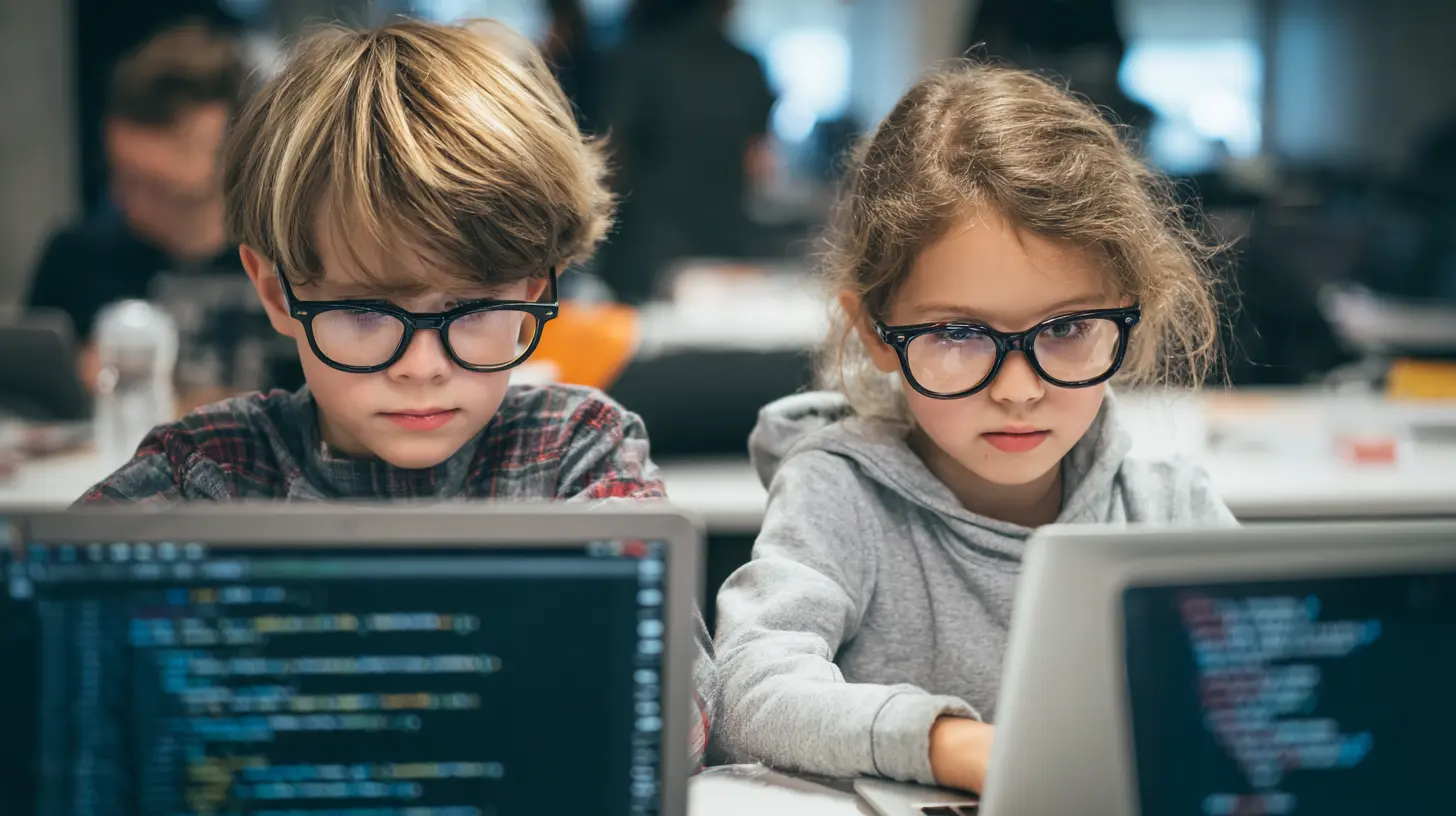
We need to have an honest conversation about AI. For a long time, parents and teachers worried that letting kids use an AI assistant to write code was like giving them the answer key to a math test. But by 2027, that mindset will feel as outdated as a flip phone.The trend is not about replacing the learning process. It is about supercharging it. Imagine a 10-year-old who has a rough idea for a game. Instead of getting stuck on the syntax of a "for loop" for an hour, they can ask their AI coding buddy, "Hey, make the character jump higher when I press the spacebar." The AI generates the code snippet. But here is the kicker: the best platforms will then immediately ask the kid, "Why do you think that works?" or "What happens if you change the number 10 to 20?"
This turns the AI from a crutch into a tutor. By 2027, we will see a massive shift from "write every line from scratch" to "understand, modify, and debug AI-generated code." The skill will be less about memorizing syntax and more about logic, problem decomposition, and critical thinking. Kids will learn to be the architect, not just the bricklayer. Platforms like Scratch will likely integrate AI suggestions directly into the block-based interface, whispering ideas like a helpful ghost in the machine.
Trend 2: The Rise of "Physical Coding" and Tangible Interfaces
Screen time is a constant worry. Every parent I know wrestles with it. The solution that will explode by 2027 is not less tech, but more physical tech. We are talking about coding that you can touch, feel, and drop on the floor.Think about it. Abstract concepts like loops and conditionals are hard for a 7-year-old to grasp when they are just colored blocks on a screen. But what if a "loop" is a physical track that a little robot car drives around until you place a "stop" block on the track? That is tangible coding.
By 2027, expect to see a boom in smart toys that blend the digital and physical worlds. We will have programmable drones that kids can control with wooden blocks, robotic arms that sort candies based on color, and modular synth kits that teach logic through music. This trend kills two birds with one stone. It teaches computational thinking without the passive, glazed-over look that comes from another hour on an iPad. It gets kids moving, collaborating, and breaking things in the real world. The "unplugged" coding movement (coding with cards and paper) will merge with these high-tech physical kits, creating a hybrid learning environment that feels more like play and less like a lecture.
Trend 3: Game Development as the Primary On-Ramp, Not Just a Reward
For years, the standard path was: learn Scratch, then graduate to Python, build a boring calculator app, and then maybe make a game. That is changing, and fast. By 2027, game development will be the primary method for teaching coding, not a side project for the "fun kids."Why? Because games are the ultimate motivator. They provide instant feedback, clear goals, and a built-in sense of accomplishment. But the trend we will see is a massive maturation of game development tools for kids. We are moving past simple platformers. By 2027, kids will be building multiplayer online battle arenas (MOBAs) using visual scripting, creating their own 3D worlds in simplified engines, and even designing basic physics simulations for racing games.
The key shift is that the tooling will be so good that a 12-year-old can produce something genuinely playable and shareable with friends. This changes the game (pun intended). It teaches not just coding concepts like variables and functions, but also project management, asset creation, and user testing. The kid becomes a mini-studio head. They learn that code is just one ingredient in a much bigger recipe. This trend will also push more girls into coding, as the narrative shifts from "coding for math" to "coding to tell a story" or "coding to build a world."

Trend 4: The Unstoppable Rise of "No-Code/Low-Code" Logic
This one might ruffle some feathers. "No-code is not real coding!" I hear the purists shouting. But hear me out. The goal of teaching kids to code is not to create a generation of carbon-copy software engineers. It is to create a generation of problem solvers who understand how technology works.By 2027, the line between "coding" and "no-code" will be blurry to the point of being meaningless. Kids will start by building complex apps with drag-and-drop logic on platforms like Bubble or Adalo. They will set up automations using Zapier to connect their favorite games to their homework trackers. They will design chatbots with visual flows.
This is not dumbing it down. This is teaching the logic of programming without the friction of syntax. It is like learning to drive a car. You do not need to know how to rebuild a transmission to navigate a city. Similarly, a kid who builds a fully functional social media clone using no-code tools has learned about databases, user authentication, API calls, and conditional logic. They have learned the architecture of an app. When they hit the limits of the no-code tool and need to write a custom function in JavaScript, they will have a burning why to learn the syntax. That is a much more powerful motivator than a textbook. In 2027, the smartest coding curriculum will start with logic and abstraction, using no-code as the training wheels, and then gently introduce text-based coding when the kid needs more power.
Trend 5: Coding Literacy Becomes a Core Subject, Like English or Math
This is the big one. The trend that will truly dominate by 2027 is the institutionalization of coding education. Right now, it is often an after-school club, a summer camp, or a parent-led initiative. But the pressure is mounting.Countries are already rolling out national curriculums. By 2027, coding will be treated less like a "special skill" and more like a "core literacy." Think about it. We teach kids to read and write not because every kid will become a novelist, but because literacy is essential for navigating the world. The same logic will apply to code. Understanding the basics of how a computer thinks, how algorithms work, and how data flows will be considered as fundamental as understanding grammar or arithmetic.
This means the tools and teaching methods will become far more standardized and integrated into other subjects. You will not just have "Coding Class." You will have a history project where kids build a timeline app, a science class where they code a simulation of the solar system, and an art class where they generate digital paintings with code. The stereotype of the lone coder in a dark room will be replaced by the collaborative problem solver in a bright classroom. This shift will also force a much-needed focus on ethics. By 2027, a 14-year-old will not just learn how to write a data-scraping script, but why it might be unethical to scrape someone's private data. The "why" will be as important as the "how."
What This Means for Parents and Educators Right Now
So, you are probably asking, "Okay, that is the future. What do I do today to prepare my kid for 2027?"First, stop panicking about the "perfect language." Python, JavaScript, Scratch... they are all just tools. The underlying logic is the same. Focus on the concepts: sequence, selection (if-then), iteration (loops), and variables. If your kid can explain what a variable is using an analogy (like a box with a label), they are winning.
Second, embrace the mess. Coding is debugging. It is failing 99 times and succeeding once. The best thing you can do is normalize that frustration. When your kid's code breaks, do not fix it for them. Ask them, "What did you expect to happen? What actually happened?" This builds the resilience that will serve them far beyond the computer screen.
Third, encourage projects, not lessons. The kid who builds a simple website for their lemonade stand learns more than the kid who completes 50 lessons on a code-learning app. Purpose is the ultimate teacher. Help them find a problem they care about, no matter how small, and use code to solve it.
Finally, be a co-learner. You do not need to be an expert. Sit down with them. Ask them to show you what they built. Let them teach you. This flips the dynamic and gives them a huge confidence boost. You might even learn a thing or two yourself.
The Elephant in the Room: Will AI Replace Coders?
I know this question is on your mind. If AI can write code, why bother teaching it? This is a fair question, but it misses the point entirely.By 2027, the job of a coder will not be to type lines of code. The job will be to tell the AI what to build. It will be about problem definition, creative vision, and ethical judgment. The skill of the future is "prompt engineering," but more than that, it is the ability to think in systems. A kid who learns to code today is not learning a trade that will be obsolete. They are learning a way of thinking. They are learning how to break down a complex problem into small, manageable steps. They are learning how to communicate with precision. They are learning how to design systems that are logical, efficient, and fair.
Those skills are not going away. They are becoming more valuable. So, do not worry about the robots. Worry about making sure your kid has the mental toolkit to be the one giving the orders, not taking them.
Final Thoughts
The landscape of teaching kids to code is about to get a major upgrade. The trends of AI assistance, physical coding, game-based learning, no-code logic, and full educational integration are not just fads. They are the logical next steps in a world that runs on software.By 2027, we will look back at today's methods and smile at how simple they were. The goal is not to produce a million young programmers. The goal is to produce a million young people who are curious, logical, creative, and unafraid of technology. And that is a future worth coding for.
So, get ready. The next few years are going to be a wild, exciting ride. And the best part? The kids will be leading the way.
all images in this post were generated using AI tools
Category:
Tech EducationAuthor:

Vincent Hubbard
Discussion
rate this article
2 comments
Nicole McKinnon
This article offers valuable insights into the future of coding education for kids. The emphasis on hands-on learning and gamification is particularly promising. As technology continues to evolve, it's crucial that we adapt our teaching methods to empower the next generation with essential coding skills for tomorrow's challenges.
June 22, 2026 at 12:37 PM
Astraea McKinney
Why not teach kids to code with the same enthusiasm as they have for video games? By 2027, we might see tiny coders creating apps while munching on snacks. Who knows? The next tech genius could be in your living room right now!
May 14, 2026 at 11:50 PM
Vincent Hubbard
Absolutely! Turning coding into a fun challenge like video games could spark creativity in kids. Imagine the apps they'll create while having a snack. The future tech genius might just be at home, ready to innovate!