The Rise of Voice-First UX: What's Coming by 2026
7 May 2026
You know that feeling when you're driving, your hands are full of groceries, or you're just too lazy to lift a finger, and you yell at your phone to set a timer? That's voice-first design in its most basic, beautiful, and slightly messy form. But let's be honest: we're barely scraping the surface right now. By 2026, voice-first UX is going to flip the entire script on how we interact with technology. And no, I'm not just talking about asking Siri to play "Despacito" one more time.
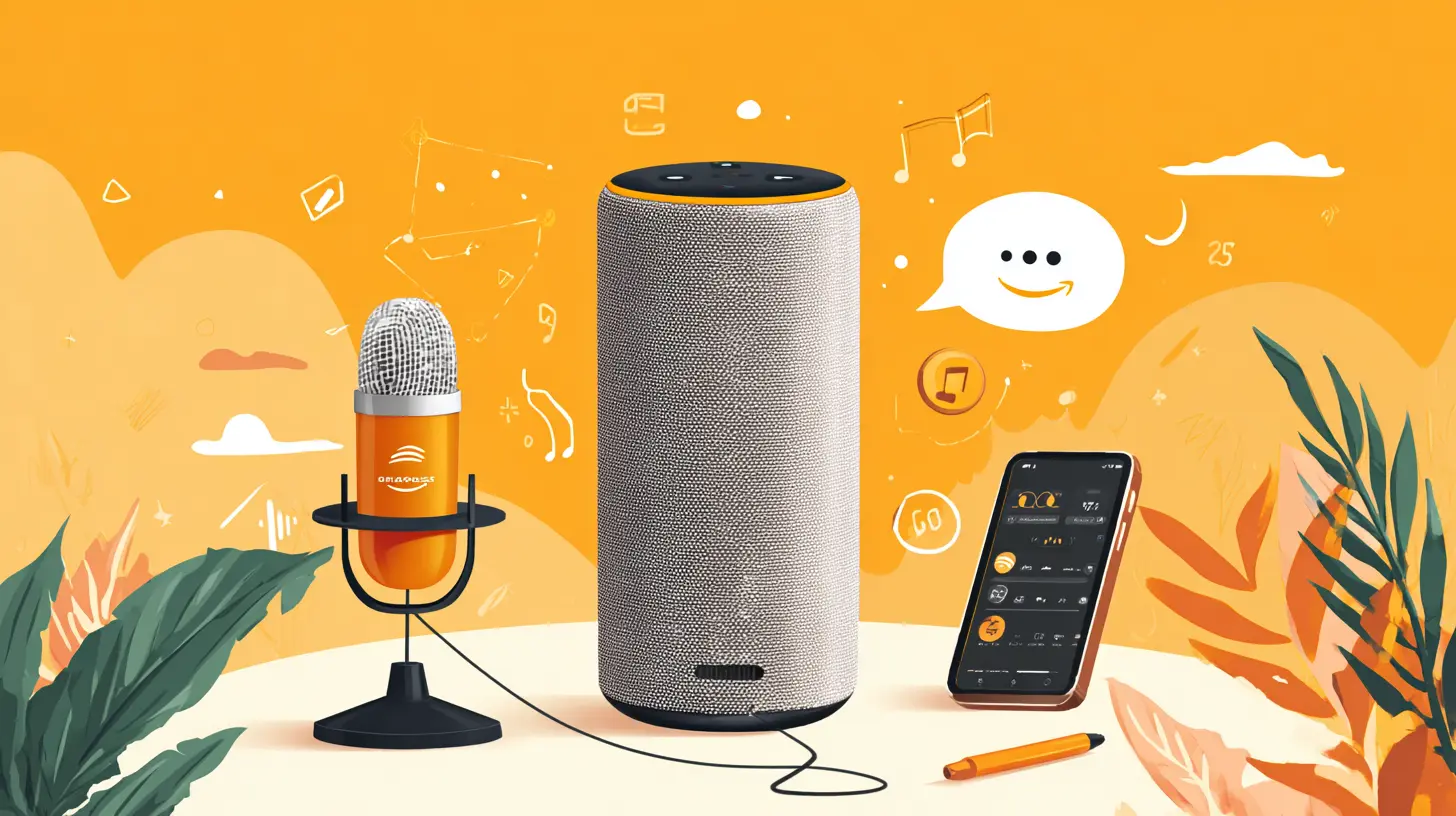
Why Voice-First Design Is Finally Growing Up
Voice interfaces have been around for a while, but they've been like that awkward teenager who says the wrong thing at a family dinner. You ask for the weather, and it gives you a Wikipedia article on clouds. You ask for a pizza, and it orders you a dozen eggs. It's been clumsy. But the tech world is finally getting serious about making voice interactions feel less like a robot having a stroke and more like a helpful buddy.By 2026, we're not just talking about voice recognition getting better at understanding your weird accent or your mumbling when you have a cold. We're talking about a complete shift in design philosophy. Instead of designing apps and websites that you click through, designers are now thinking about what you say to get there. This is the difference between pulling a lever and having a conversation.
The "Hands-Free" Revolution Is Real
Let's face it: our hands are busy. We're cooking, driving, holding a baby, or just trying to eat a burrito with one hand while scrolling with the other. Voice-first UX is the ultimate power move for multitaskers. By 2026, expect to see voice control baked into everything from your microwave to your car's dashboard. But here's the twist: it won't just be about shouting commands. It will be about having a back-and-forth chat.Imagine your smart fridge not just telling you that you're out of milk, but asking, "Hey, you want me to add it to the shopping list? Also, I noticed you've been eating a lot of cheese lately. Should I order some healthier snacks?" That's the kind of context-aware, conversational design that's coming. It's not creepy; it's just... thoughtful. Mostly.

The Death of the "Wake Word" (Kind Of)
Right now, we're stuck saying "Hey Siri," "Alexa," or "Okay Google" like some kind of incantation. It's a necessary evil, but it's also a barrier. By 2026, voice-first designers are working on a world where you don't need a specific wake word for every single interaction. The device will just know when you're talking to it, based on your proximity, your gaze, or even your tone of voice.Think of it like walking into a room and just speaking to a friend. You don't say "Hey Friend, please tell me the time." You just say, "What time is it?" And they answer. That's the dream. By 2026, your smart speaker might be able to detect that you're looking at it, or that you just finished a conversation with someone and you're now turning to it. It's a subtle shift, but it makes the whole experience feel less like a command-line interface and more like a human interaction.
Context Is King, But Memory Is Queen
One of the biggest failures of current voice assistants is their goldfish-like memory. You tell it your favorite restaurant, and two minutes later, it acts like you've never met. By 2026, voice-first UX will be built on persistent context. The system will remember your preferences, your schedule, and even your mood.This isn't just about personalization; it's about flow. You'll be able to say, "Find me a Thai place near the gym I went to last Tuesday," and it will actually understand what you mean. It will connect the dots between "gym," "last Tuesday," and "Thai food" without you having to spell it out like a five-year-old. This requires a massive leap in natural language processing and memory architecture, but it's coming. And it's going to make voice interactions feel less like a chore and more like a conversation with a very smart, slightly forgetful friend who just got a memory upgrade.

Voice-First UX and the Battle Against Screen Addiction
Here's a wild thought: what if voice-first design is actually good for your mental health? We're all glued to our screens. We scroll, we tap, we swipe until our thumbs hurt. Voice-first UX offers a way out. It lets you interact with technology without staring at a glowing rectangle.By 2026, expect to see entire categories of apps that are designed to be used without a screen. Think of a meditation app that you just talk to. A journaling app that listens and responds. A cooking app that walks you through a recipe step-by-step while your hands are covered in flour. This is the silent revolution of the "invisible interface." The best interface is no interface at all, right? Voice-first design takes that to its logical extreme.
The "Barge-In" Problem and the Art of Interruption
Let's talk about one of the most annoying things about current voice assistants: they talk too much. You ask a simple question, and they give you a five-minute monologue. "Here's what I found on the web for 'how to boil an egg'..." No, just tell me the time, buddy.By 2026, voice-first UX will master the art of the "barge-in." You'll be able to interrupt the assistant, and it won't get confused. It will gracefully shut up and adjust. This is harder than it sounds. It requires the system to understand that your interruption isn't a command to stop entirely, but a request for a shorter answer. It's like having a conversation where both people know when to talk and when to listen. It's going to make voice interactions feel snappy and efficient, not like you're on hold with customer service.
The Rise of Voice Commerce (V-Commerce)
You've probably ordered a pizza through voice before. But by 2026, voice commerce will be a serious channel. We're talking about buying clothes, booking flights, and even investing in stocks just by talking.The challenge here is trust and security. You can't just say "buy me a new laptop" and have it show up. The system needs to authenticate you, confirm the details, and handle payments. By 2026, expect voice biometrics (your voiceprint) to become as standard as a fingerprint. You'll say a passphrase, and the system will know it's you. But here's the funny part: voice commerce will also need to handle the "oops" factor. What if you sneeze and accidentally order 50 pairs of socks? Designers are already working on "confirmation loops" that are natural and conversational. "You want to buy a 14-inch MacBook Pro in space gray? Is that right?" And you just say "yeah" or "no, the silver one."
The Invisible User Interface (IUI)
This might be the biggest shift of all. By 2026, the concept of a "user interface" as a visual thing will start to fade. Voice-first design is moving toward the Invisible User Interface (IUI). You won't see buttons, menus, or sliders. You will simply speak your intent. The system does the rest.Think about how you interact with a light switch. You don't think about the interface; you just flip it. Voice-first UX aims to be that seamless. You'll walk into a room and say, "Make it cozy," and the lights dim, the music starts, and the temperature adjusts. There's no app, no screen, no settings menu. It's just you and your voice. This is the holy grail of UX design: making technology disappear into the background.
What About the "Edge" Cases? (Or, How to Handle a Whisper)
Voice-first design has to be ready for everything. What if you're in a library? What if you have a cold? What if you're whispering? By 2026, voice interfaces will be far more robust. They'll handle whispers, loud environments, and even speech impairments with grace.Designers are working on "adaptive gain" and "noise cancellation" that doesn't just filter out background noise, but actually understands the intent behind a whisper. If you whisper "turn down the music," the system should know you don't want to wake the baby, not that you're trying to be dramatic. This level of nuance is what separates a good voice interface from a great one.
The "Multimodal" Future: Voice + Touch + Gaze
Here's where it gets really interesting. Voice-first doesn't mean voice-only. By 2026, we'll see the rise of "multimodal" interfaces that combine voice with touch, gaze, and even gesture. You might look at a map and say "zoom in here," and the system will understand that "here" is where your eyes are focused. You might tap a picture and say "send this to Mom," and it will know exactly which picture you mean.This is the natural evolution. Voice is great for intent and commands, but touch and gaze are better for spatial selection. Combining them creates a superpower. It's like having a conversation while pointing at things. It's intuitive, fast, and feels like magic.
The Humor in Voice Errors (We'll Miss Them)
Let's be real for a second. The best part of current voice assistants is their hilarious failures. The time you asked for "directions to the mall" and it played "All by Myself." The time you said "call Mom" and it called your ex. We'll miss those moments when voice-first UX becomes flawless. But don't worry; there will always be new ways for technology to misunderstand us. By 2026, the errors will be more subtle. Instead of calling the wrong person, it might misinterpret your tone. You say "fine" in a sarcastic voice, and it asks, "Are you sure you're fine? I sense some frustration." That's both helpful and a little creepy.How Designers Are Preparing for 2026
If you're a UX designer reading this, here's the deal: start thinking in terms of dialogue, not screens. Stop designing wireframes and start designing conversations. Map out user journeys as a series of "turns," like a play. What does the user say? What does the system say back? How do you handle silence? How do you handle a user changing their mind mid-sentence?The tools are changing too. By 2026, voice prototyping tools will be as common as Figma. You'll be able to record a fake conversation and test it with users before writing a single line of code. The focus will shift from visual hierarchy to audio hierarchy. What sounds do you use to indicate a successful action? A chime? A soft beep? A human-like "okay"? The audio feedback will become as carefully designed as the visual feedback is today.
The Bottom Line: It's a Conversation, Not a Command
By 2026, voice-first UX will be less about giving orders and more about having a partnership. You'll talk to your devices the way you talk to a colleague or a personal assistant. It will be respectful, context-aware, and occasionally funny. The technology will fade into the background, and the interaction will feel natural.But let's not get too utopian. There will be privacy concerns. There will be awkward moments when you accidentally activate your smart speaker in a meeting. There will be the occasional "I don't understand" that makes you want to throw the device out the window. But overall, the trajectory is clear: we're moving toward a world where you don't have to learn how to use a computer. You just talk to it.
And honestly? That's pretty cool. Even if it does sometimes think you said "potato" when you clearly said "tomato."
all images in this post were generated using AI tools
Category:
User ExperienceAuthor:

Vincent Hubbard
Discussion
rate this article
2 comments
Odessa McClary
Voice-first UX will reshape our interactions.
May 30, 2026 at 11:49 AM
Vincent Hubbard
Absolutely! Voice-first UX is already changing how we engage with technology. Exciting times ahead!
Porter Chapman
Voice-first UX is reshaping how we interact with technology, but it raises important questions about accessibility and privacy. As we move towards 2026, developers must prioritize inclusivity and data protection to avoid alienating users and ensure that voice interfaces enhance rather than complicate our daily lives.
May 10, 2026 at 4:39 AM
Vincent Hubbard
You make a great point. Inclusivity and privacy must be at the forefront of voice-first design. Balancing innovation with user trust will be key to creating seamless experiences.