Unlocking Omni-Channel Success with Next-Gen Tools by 2027
25 April 2026
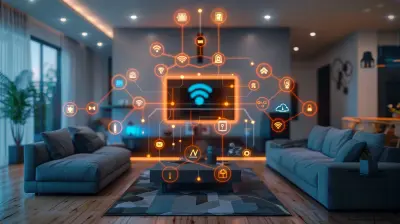
Let’s be honest: the term “omni-channel” has been floating around marketing circles for years, often feeling like a buzzword that sounds great in boardrooms but falls apart in execution. You’ve probably tried to connect your email campaigns, social media, in-store experience, and website, only to end up with a tangled mess of data silos and frustrated customers. Sound familiar? Well, grab your coffee, because by 2027, we’re not just going to fix that mess—we’re going to make it sing. The next-generation tools arriving on the scene are less about “managing channels” and more about creating a seamless, almost magical experience where your customers feel like you’ve read their minds. And that’s not hyperbole; it’s the reality of what’s coming.
The Great Disconnect: Why Your Current Strategy Isn't Cutting It
Before we dive into the shiny future, let’s get real about the present. You’ve got data coming from your CRM, your e-commerce platform, your social media analytics, and your point-of-sale system. But these systems rarely talk to each other. It’s like having a dinner party where the guests are in different rooms, speaking different languages, and the host (you) is running around trying to serve appetizers to everyone at once. The result? A customer who browses your website on their phone, adds items to their cart, then walks into your store and asks a sales associate about the same product—only to be told, “I’m sorry, I don’t see that in our system.” That’s not omni-channel; that’s a broken promise.By 2027, the tools we’ll use won’t just connect these dots—they’ll redraw the entire constellation. Think of it as moving from a patchwork quilt to a seamless digital tapestry. The key? Next-gen tools that leverage AI, real-time data orchestration, and hyper-personalization at a scale we’ve only dreamed of.
The AI Brain: Your Omni-Channel Command Center
Imagine an AI that doesn’t just analyze your data but lives inside it. By 2027, we’ll have what I like to call the “omni-brain”—a central nervous system for your entire customer journey. This isn’t your grandfather’s chatbot. It’s a predictive engine that knows what a customer wants before they do. Here’s how it works: a customer named Sarah searches for “vegan leather handbags” on your site, then abandons her cart. Your current system might send her a generic “You left items in your cart” email. But the omni-brain? It knows she also searched for sustainable fashion on Instagram last week, and it sees that she’s in a city where you have a pop-up store. So it sends her a personalized text: “Hey Sarah, we saved your handbag. Come try it on at our pop-up on 5th Avenue—show this message for 10% off.” That’s not a campaign; that’s a conversation.These AI tools will use natural language processing (NLP) to understand intent, not just keywords. They’ll analyze tone, sentiment, and even the time of day a customer engages. By 2027, your marketing stack won’t be a collection of apps—it’ll be a single, living entity that breathes data. And the best part? It learns from every interaction, so it gets smarter with each customer touchpoint. No more guessing. No more spray-and-pray marketing.
Real-Time Data Orchestration: The Glue That Holds It All Together
You know that frustrating moment when you see an ad for a product you just bought? That’s a data latency problem. By 2027, next-gen tools will eliminate this lag using something called real-time data orchestration platforms. Think of them as the air traffic control for your customer data. They don’t just store information; they route it instantly to the right channel at the right moment.Let me paint you a picture. You’re a retailer. A customer buys a pair of shoes online. Within seconds, that purchase triggers an update in your inventory system, removes it from your website, adds the customer to a loyalty program, and sends a push notification to their phone with a care guide for the shoes. Meanwhile, their in-store profile updates so that next time they walk in, the sales associate can say, “How are those sneakers treating you?” without the customer having to repeat themselves. That’s not sci-fi—that’s the power of orchestration.
The tools enabling this are moving away from batch processing (think: overnight updates) to event-driven architectures. By 2027, we’ll see platforms like Apache Kafka and cloud-native event streams become as common as email marketing software. They’ll handle millions of events per second, ensuring your customer never feels like they’re talking to a robot with amnesia.

Hyper-Personalization at Scale: One-to-One Without the Creep Factor
Let’s address the elephant in the room: personalization can feel creepy. Nobody likes getting an ad for a product they whispered about near their phone. But next-gen tools are solving this by focusing on contextual relevance rather than just surveillance. By 2027, hyper-personalization will be so nuanced that it feels like a friendly nudge, not a stalker.How? Through privacy-first AI models that use on-device processing and differential privacy. Instead of collecting every scrap of data and storing it in a cloud, these tools will analyze patterns locally on the user’s device and only send anonymized insights to your system. For example, a customer’s phone might detect they’re in a rainy city and suggest your waterproof jacket—without ever sending their location data to your servers. It’s like having a personal shopper who’s perceptive but respects boundaries.
The scale is mind-blowing. Imagine sending a million unique emails, each with a subject line, product recommendation, and discount tailored to that individual’s browsing history, purchase behavior, and even the weather in their area. By 2027, this won’t be a luxury for enterprise brands—it’ll be table stakes for any business that wants to survive. Tools like dynamic content engines and AI-generated copy will make it possible to write 10,000 variations of a single campaign in minutes. And yes, they’ll sound human, because they’ll be trained on your brand voice.
The Rise of Conversational Commerce: Chatbots That Actually Help
Remember the days of clunky chatbots that could only say “I didn’t understand that. Please rephrase.”? Those days are numbered. By 2027, conversational AI will be indistinguishable from a human sales associate—or, dare I say, better. Next-gen tools like multimodal AI will let customers interact with your brand via voice, text, images, and even video in a single conversation.Here’s a scenario: A customer takes a photo of a broken lamp they own. They send it to your brand’s WhatsApp chatbot. The AI recognizes the lamp model, checks your inventory for a replacement part, offers a tutorial video for repair, and if the customer prefers, schedules a delivery—all without a single human intervention. That’s not just convenience; it’s delight.
These tools will also bridge the gap between digital and physical. Imagine a customer using voice search to find “red sneakers under $100” on your app. The AI not only shows options but also checks if those sneakers are in stock at their nearest store. If yes, it reserves a pair and gives them a QR code to scan at checkout. If no, it offers free shipping to their home. The conversation flows, the channels blur, and the customer never feels like they’re jumping through hoops.
Predictive Analytics: Seeing Around Corners
One of the most exciting developments by 2027 will be the maturity of predictive analytics in omni-channel strategies. We’re not just talking about “customers who bought this also bought that.” We’re talking about churn prediction, lifetime value forecasting, and next-best-action recommendations that are accurate to within 90% confidence.Let me give you an analogy. Imagine you’re a chess player. Right now, most brands play checkers, reacting to moves the customer makes. Predictive tools let you play chess three moves ahead. You can see that a customer’s engagement is dropping, their support tickets are increasing, and their purchase frequency is declining. Instead of waiting for them to leave, you proactively send a personalized offer, a handwritten thank-you note, or a VIP invitation to an exclusive event. By 2027, these tools will be so integrated that they’ll trigger actions automatically—like a thermostat that adjusts the temperature before you even feel cold.
The data sources will expand too. Next-gen tools will incorporate unstructured data—think social media posts, customer reviews, and even call transcripts—into predictive models. They’ll analyze sentiment in real-time and flag potential issues before they explode. If a customer tweets, “Ugh, my package is late again,” the system will not only apologize but also offer a discount on their next order, all within minutes. That’s not reactive service; that’s proactive care.
Unified Customer Profiles: The Holy Grail
We’ve all heard about the “single customer view,” but it’s been a myth for most brands. By 2027, next-gen tools will make this a reality through identity resolution platforms that use graph databases and probabilistic matching. These systems don’t just merge data from different sources—they deduplicate it, enrich it, and update it in real-time.Think of it like this: Your customer David might use different emails for your newsletter, his loyalty account, and his purchase history. He might log in via Google on your site but use Apple Pay in your store. Traditional systems see three different Davids. Next-gen tools see one David, with a unified profile that includes his preferences, behaviors, and even his pet’s name (if he shared it). By 2027, these profiles will be so rich that you can segment audiences by micro-moments—like “customers who browsed baby products in the last 30 days but haven’t bought yet.” The accuracy will be staggering.
The Human Touch: Why Automation Isn’t the Enemy
Now, you might be thinking, “This all sounds great, but won’t it make everything robotic?” Fair question. But here’s the secret: next-gen tools are designed to amplify human connection, not replace it. By 2027, the best omni-channel strategies will use automation to handle the repetitive, data-heavy tasks so that your human team can focus on empathy, creativity, and building relationships.For example, a chatbot can handle the first three interactions with a customer—answering FAQs, tracking orders, and suggesting products. But if the customer expresses frustration or asks a complex question, the system seamlessly hands off to a human agent, along with the full conversation history. The agent doesn’t have to ask, “What seems to be the problem?” because they already know. That’s the power of omni-channel done right: it makes humans more effective, not obsolete.
The tools will also empower your frontline staff. Imagine a sales associate in a store with a tablet that shows a customer’s entire journey—their online browsing, their past purchases, their wishlist—in real-time. The associate can say, “I see you’ve been looking at our leather jackets. Let me show you one that’s on sale today.” That’s not creepy; that’s helpful. And by 2027, this will be the norm, not the exception.
The Cost of Inaction: Why You Can’t Wait Until 2027
I know what you’re thinking: “This all sounds expensive and complex.” And you’re not wrong—early adoption of next-gen tools will require investment. But consider the alternative. By 2027, customers will expect this level of seamlessness. They’ll have zero tolerance for brands that can’t remember their name, their preferences, or the fact that they just returned a defective product. If you’re still using siloed systems and batch processing, you’ll be the equivalent of a store with a dial-up modem in a 5G world.The good news? You don’t have to overhaul everything overnight. Start small. Pick one channel—say, email and SMS—and integrate them using a next-gen orchestration tool. Measure the lift in engagement and revenue. Then expand to social media, then in-store, then voice. By 2027, you’ll have built a foundation that’s ready for the next wave of innovation, whatever that may be.
What’s Next? The 2027 Omni-Channel Toolkit
Let’s get specific about the tools you’ll be using in three years. Here’s a sneak peek:- AI-Powered CDPs (Customer Data Platforms): These will be the backbone, unifying data from every touchpoint and feeding it to all your channels in real-time.
- Generative AI for Content: Tools like GPT-5 (or its successor) will write personalized copy, create product images, and even generate video scripts tailored to individual customers.
- Edge Computing: By processing data closer to the customer (on their phone, in-store kiosks, or IoT devices), edge computing will reduce latency and improve privacy.
- Blockchain for Trust: Imagine a transparent ledger where customers can see exactly how their data is used. This will be a differentiator for brands that prioritize ethical personalization.
- Augmented Reality (AR) Shopping: By 2027, AR won’t be a gimmick—it’ll be a standard channel. Customers will try on clothes, see furniture in their home, or test makeup shades—all from their phone, with the results synced to their profile.
A Final Thought: The Customer Is the Channel
Here’s the biggest mindset shift you need to make. Omni-channel success isn’t about having more channels; it’s about meeting the customer wherever they are, on their terms. The next-gen tools by 2027 will make it possible to treat every interaction as a thread in a larger narrative, not an isolated event. Your job? To weave those threads into a story that feels coherent, personal, and human.So, are you ready to unlock omni-channel success? The tools are coming, but the strategy starts now. Start asking the hard questions: How well do your systems talk to each other? How much do you really know about your customers? And most importantly, are you ready to let AI handle the heavy lifting so you can focus on the magic? By 2027, the brands that answer “yes” will be the ones customers rave about—and the ones that don’t will be footnotes in marketing history.
Let’s make sure you’re in the first group.
all images in this post were generated using AI tools
Category:
Digital Marketing ToolsAuthor:

Vincent Hubbard
Discussion
rate this article
2 comments
Alisha Mullen
Embrace innovation! Next-gen tools will redefine omni-channel success and elevate your business to new heights!
April 29, 2026 at 12:59 PM
Vincent Hubbard
Absolutely! Embracing innovation is key to staying ahead in omni-channel strategies. Exciting times are ahead!
Selkie McLemore
Exciting insights for future growth!
April 29, 2026 at 4:39 AM