Why Microinteractions Will Define UX in 2027
16 April 2026
Let’s be honest for a second. How often do you consciously think about the tiny click when you like a post, the satisfying swish of a pull-to-refresh, or the cheerful little animation that pops up when you add an item to your cart? If you’re like most of us, the answer is almost never. Yet, these minuscule moments—these microinteractions—are the secret sauce of our digital experiences. They’re the unsung heroes, the background actors who, without a single line of dialogue, make the movie worth watching.
Now, fast forward to 2027. The digital landscape will be almost unrecognizable. We’ll be navigating complex AI interfaces, spatial computing environments, and ambient devices woven into the fabric of our lives. In this chaotic, hyper-connected world, what will be the anchor of understanding? What will translate cold, complex machine processes into warm, human-centric moments? You guessed it: microinteractions. They won’t just be decorative flourishes; they will become the primary language of user experience (UX), the fundamental bridge between human intent and system response. This isn’t a prediction; it’s an inevitability. Let’s dive into why.

What Are Microinteractions, Really? (It’s More Than a Pretty Animation)
Before we rocket into the future, let’s ground ourselves. A microinteraction is a single, contained product moment centered around accomplishing one small task. Think of it as a conversation with a single, clear purpose. The classic framework, coined by designer Dan Saffer, breaks it down into four parts:1. Trigger: What starts it? (You click a button, you receive a new message).
2. Rules: What happens? (The system processes the like, sends the data).
3. Feedback: How do you know it’s happening? (The heart icon fills with color and gives a gentle pop).
4. Loops & Modes: What about over time? (Does the animation change on the 10th like?).
So, it’s not just the animation. It’s the entire sensory dialogue—the visual change, the haptic buzz, the subtle sound, the feeling of direct manipulation. It’s the difference between a door that slams shut and one with a soft-close mechanism. Both doors close, but one feels intentional, quality, and respectful. That’s the power we’re talking about.

The 2027 Digital Landscape: Why We’ll Need This Language More Than Ever
Imagine trying to navigate a city without street signs, traffic lights, or the subtle cues of pedestrian movement. Overwhelming, right? The digital world of 2027 will be that dense, sprawling city. Here’s what’s moving in, and why microinteractions will be its essential signage.The Rise of Invisible & Ambient Interfaces
Our interactions are shifting from screens to spaces. Voice assistants, AR glasses, smart home hubs, and IoT devices often have no traditional interface. How do you know your smart thermostat understood your mumbled command? How does your AR glasses confirm you’ve selected a virtual menu item? A contextual sound, a light pattern on a device, a subtle visual cue in your periphery—these are microinteractions doing the heavy lifting of communication without a single button.AI and Uncertainty: Building Trust Through Tiny Affirmations
We’re increasingly interacting with systems that are probabilistic, not deterministic. An AI doesn’t "know" in the human sense; it calculates. When you ask a complex AI to generate an image, draft an email, or analyze data, there’s inherent uncertainty. A spinning wheel for 30 seconds breeds anxiety. But a microinteraction that shows progressive disclosure—little particles assembling into the image, a status bar that morphs as different sections of the email are crafted, a data visualization that builds itself piece by piece—does something critical. It visualizes the process. It builds a narrative of work being done. It transforms a black box of mystery into a transparent, and thus trustworthy, process.Information Overload and the Battle for Attention
The flood of notifications, updates, and data isn’t slowing down. Our cognitive load is at a breaking point. A well-designed microinteraction acts as a cognitive relief valve. It uses pre-attentive processing (things our brain understands before we consciously think) to communicate instantly. A color change, a specific motion path, a distinct sound—these bypass the need for textual analysis. In 2027, the most respectful and effective interfaces will be those that communicate complex information through these effortless, glanceable micro-moments, saving our precious mental energy for what truly matters.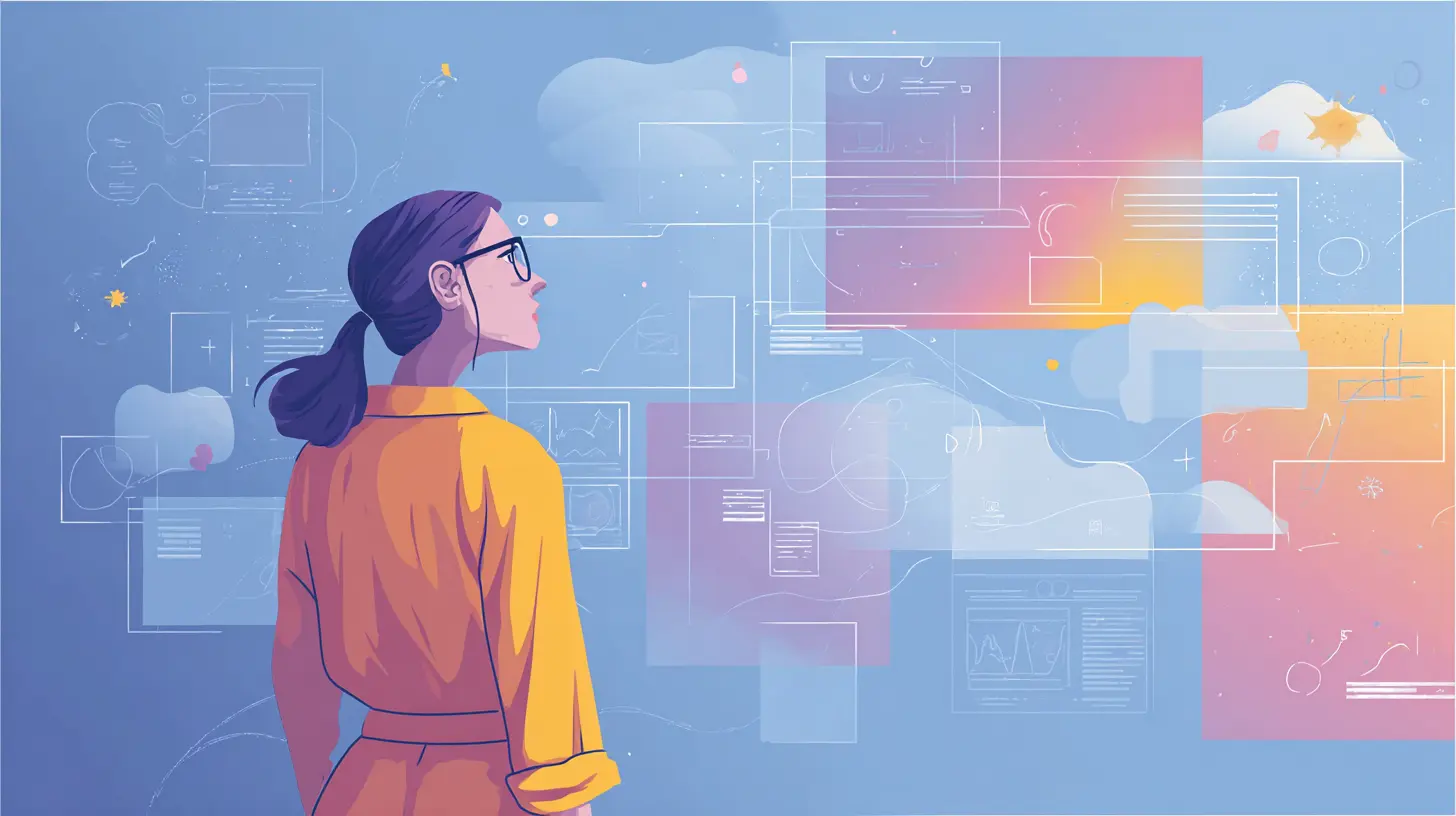
The Evolution: How Microinteractions Will Transform by 2027
So, microinteractions will be essential. But how will they themselves change? They’re going to get smarter, more personalized, and more… alive.From Generic to Hyper-Contextual & Adaptive
Today’s microinteractions are largely one-size-fits-all. The ping for a text is the same whether it’s from your boss or your best friend. By 2027, fueled by contextual AI, they will adapt in real-time.* Emotional Context: Your fitness app’s celebration animation might be exuberant after a personal best, but subtly encouraging after a difficult, slow run.
* Environmental Context: In a loud café, a notification might use a more pronounced haptic pattern. In a quiet meeting, it might be a barely perceptible light pulse on your device edge.
* User State: Detecting frustration from rapid, failed inputs? The interface could respond with a calming, stabilizing animation to slow the interaction loop and guide the user gently.
The Multi-Sensory Symphony: Beyond the Screen
We’ve been obsessed with visuals. 2027’s microinteractions will engage a fuller sensory palette in a cohesive way.* Haptics Evolved: We’ll move beyond simple buzzes to nuanced tactile feedback. Imagine dragging a virtual slider in AR and feeling textured resistance at set points, or receiving a notification with a haptic "pattern" unique to the sender.
* Spatial Audio: With the proliferation of AR/VR and advanced headphones, sound will become directional and spatial. A confirmation chime will feel like it comes from the virtual button you just pressed, grounding the action in space and enhancing realism.
Synesthesia Design: The best experiences will synchronize these elements perfectly. A successful payment isn’t just a checkmark; it’s a visual bloom, a satisfying cha-ching* in your right ear, and a quick, crisp double-tap on your wrist. This multi-sensory reinforcement creates an unforgettable feeling of solidity and truth.
The Personality Layer: Branding Through Motion and Moment
In a crowded market, your UI’s personality won’t live in your color palette or logo alone. It will live in how it moves and responds. Your suite of microinteractions—the way buttons depress, data loads, errors recover—will form a "motion language" as distinct as a brand’s verbal tone. Is your app playful? Maybe elements bounce with a slight wobble. Is it professional and efficient? Perhaps transitions are swift, direct, and use elegant fades. By 2027, a brand’s UX style guide will have a comprehensive "microinteraction library" that is as mandatory as its font files.
The Practical Imperative: What This Means for Designers & Businesses
This isn’t just academic futurism. The shift towards microinteraction-centric design has concrete implications starting right now.For Designers: The skill set is expanding. You’ll need to be part animator, part sound designer, part psychologist, and part choreographer. Prototyping tools will need to seamlessly integrate motion, sound, and haptic feedback. The focus will shift from designing static screens to designing dynamic moments.
For Product Managers & Businesses: The ROI calculation changes. Investing in microinteraction design won’t be seen as a "nice-to-have" polish but as a core functionality for usability and differentiation. Metrics will evolve to measure emotional engagement, reduction in user confusion, and task completion confidence, not just click-through rates. The question won’t be "Does it work?" but "Does it feel right, trustworthy, and human?"
The Human Core: Why This Ultimately Matters
We can talk about tech and trends all day, but this boils down to something profoundly human: connection and empathy. In a world of increasingly abstract, automated, and intelligent systems, we risk feeling alienated from the technology we use. Microinteractions are our antidote to that coldness.They are the digital equivalent of a nod from a colleague confirming they heard you, the reassuring hand on the shoulder, the smile from a barista as they hand you your coffee. They are tiny acknowledgments that say, "I see you," "I understand," and "Task accomplished." They inject humanity into the binary.
By 2027, as technology dissolves further into our environment and lives, these small moments of human-centric design will be the difference between a future that feels helpful, intuitive, and even joyful, and one that feels cold, confusing, and alienating. The companies and designers who understand this—who pour their creativity and empathy into these micro-moments—will not only define UX; they will define how we feel about the digital world itself. And that, in the end, is everything.
all images in this post were generated using AI tools
Category:
User ExperienceAuthor:

Vincent Hubbard
Discussion
rate this article
2 comments
Tiffany Walker
Absolutely love this! Microinteractions are like the little surprises in life—small but impactful. Can’t wait to see how they’ll elevate our digital experiences by 2027. Exciting times ahead!
April 20, 2026 at 2:44 AM
Vincent Hubbard
I completely agree! Microinteractions really do add that extra touch, making experiences feel more engaging. The future looks bright!
Ingrid McBride
Exciting insights! Microinteractions truly enhance user experience. Embracing these details will undoubtedly shape the future of tech design. Keep innovating!
April 16, 2026 at 11:44 AM
Vincent Hubbard
Thank you! I'm glad you found the insights valuable. Embracing microinteractions is indeed key to shaping the future of UX. Let's keep pushing the boundaries of design!