Can China repeat its EV success with robotaxis?
July 7, 2026 - 03:45
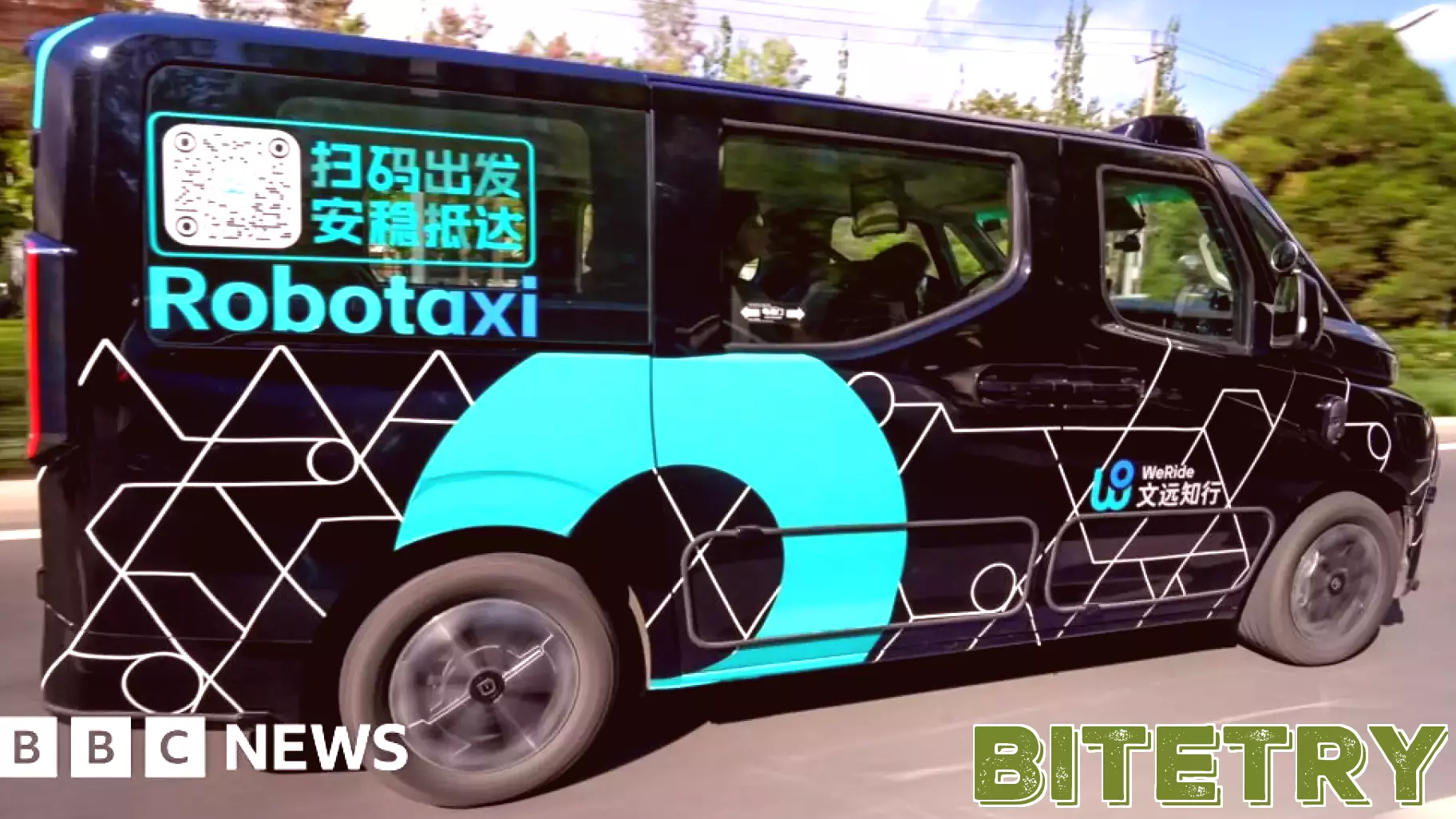
China's electric vehicle makers have taken the world by storm, and now the country's autonomous driving firms are hoping to replicate that success with robotaxis. These companies are betting that the same powerful supply chain and manufacturing ecosystem that propelled brands like BYD and Nio to global prominence can give them a decisive edge in the race for self-driving cars.
The logic is straightforward. China already dominates the production of sensors, cameras, and lidar systems that robotaxis rely on. This local supply chain allows Chinese firms to build their autonomous fleets at a fraction of the cost faced by American rivals like Waymo or Cruise. Lower hardware costs mean they can deploy more vehicles faster, gathering the massive amounts of real-world driving data needed to train their AI systems.
Several Chinese companies are already testing robotaxis on the streets of Beijing, Shanghai, and Shenzhen. They are not just competing on price. They are also adapting quickly to local road conditions, from chaotic traffic circles to narrow alleyways, which are far more complex than the grid-like streets of many U.S. cities. This experience in handling unpredictable driving scenarios could become a valuable export.
However, the path abroad is not smooth. Regulatory hurdles in Europe and North America remain steep, and public trust in self-driving technology is fragile after several high-profile accidents involving autonomous vehicles. There is also the geopolitical friction. Concerns over data security and the risk of Chinese vehicles being used for surveillance have already led to tariffs on Chinese EVs. Similar barriers could be erected for robotaxis.
Despite these challenges, the momentum is clear. With a home market that is both huge and hungry for innovation, Chinese robotaxi firms are scaling up rapidly. If they can navigate the regulatory and political minefields overseas, they may well prove that the formula for EV dominance works just as well for self-driving cars.
MORE NEWS
July 6, 2026 - 19:35
MSU researchers develop technology to protect hydroponic crops from harmful bacteriaResearchers at Montana State University are developing a novel technology aimed at protecting hydroponic crops from dangerous bacterial contamination. The project seeks to address a growing...

July 6, 2026 - 03:06
Advancing Confidence in Metabolomics Research With Rohan ThakurIn a recent discussion, Rohan Thakur shared insights on how new tools are reshaping the field of metabolomics. He emphasized that the biggest challenge for researchers today is not just identifying...

July 5, 2026 - 19:11
Is Align Technology (ALGN) Fully Priced As EU Antitrust Scrutiny Clouds Its Valuation?The European Commission has launched a formal antitrust investigation into Align Technology, targeting the company`s iTero scanners and the Invisalign ecosystem. The probe has put a sharper focus...

July 5, 2026 - 11:59
Ten Technologies That Refuse to DieEvery one of these technologies was declared obsolete at some point. The surprising part is why millions of people are still using them today. Fax Machines In the age of email and cloud...